
So, what is the exact height of a professional basketball hoop? The NBA hoop height, along with basketball rim height across most professional and collegiate leagues, is set at 10 feet. This is the regulation basketball hoop height, the official basketball hoop height, and the standard basketball hoop measurement that defines the sport.
This seemingly simple fact is the bedrock upon which the entire game of basketball is built. From the slam dunks of giants to the arcing three-pointers, every shot, every rebound, and every defensive strategy is influenced by this precise measurement. But how did this 10-foot standard come to be? What factors contributed to its establishment? And does this height vary across different levels of play or international organizations? Let’s dive deep into the world of basketball hoops and explore the “real deal” behind their elevation.
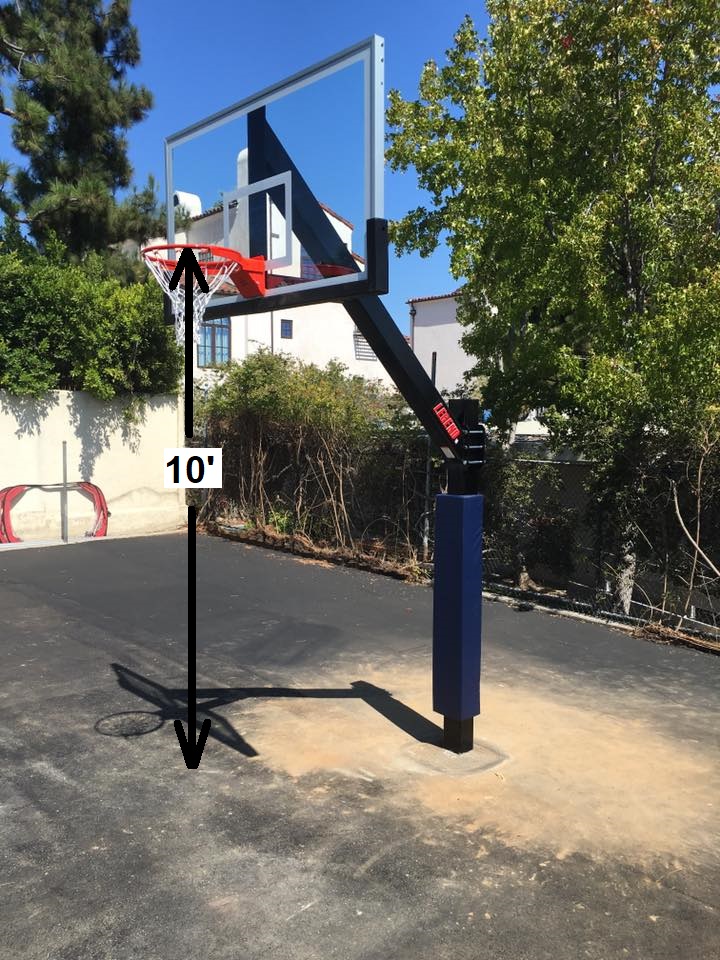
Image Source: www.firstteaminc.com
The Genesis of the 10-Foot Hoop
The history of basketball is relatively short, with Dr. James Naismith inventing the game in December 1891. Initially, Naismith used peach baskets as goals, which were nailed to the gymnasium balcony railing. The height of these baskets, when hung, was approximately 10 feet. This was not a deliberate choice based on athletic performance metrics but rather a practical consideration of what was available and at a manageable height for the players, who were instructed to toss the ball into the elevated basket.
As the game evolved and evolved rapidly, so did the equipment. The peach baskets were soon replaced by metal hoops with nets, and the need for a standardized height became apparent. The early days of basketball saw some variations in hoop height, but the 10-foot mark quickly gained traction and became the de facto standard. This standardization was crucial for the sport’s growth and its eventual professionalization.
Early Adaptations and Standardization
- Peach Baskets: Naismith’s original goals were essentially elevated containers. The height was determined by the balcony, not a specific athletic principle.
- First Formal Rules: As the game moved from informal gymnasiums to more structured settings, the need for consistent equipment became clear.
- Emergence of the 10-Foot Standard: By the early 20th century, the 10-foot measurement was widely adopted, providing a consistent challenge for players.
This early adoption of the 10-foot height was, in many ways, serendipitous. It wasn’t born from extensive biomechanical studies or predictions of future athletic prowess. Instead, it was a pragmatic solution that, as it turned out, provided a remarkably balanced challenge. It was high enough to require skill and athleticism to score, but low enough to allow for a wide range of players to participate and develop their shooting abilities.
Professional Leagues: A Universal Standard
When we talk about professional basketball, we are primarily referring to leagues like the National Basketball Association (NBA) in the United States. However, professional basketball is a global phenomenon, with prominent leagues in Europe, Asia, and other parts of the world. It’s important to note that the NBA hoop height is mirrored by many other professional leagues worldwide.
The NBA Hoop Height
The NBA is the pinnacle of professional basketball, and its adherence to the 10-foot standard is unwavering. Every NBA hoop height is precisely measured from the playing surface to the rim’s upper edge. This consistency ensures that a shot taken in Los Angeles is judged by the same physical parameters as a shot taken in Boston or any other NBA arena. This uniformity is essential for player development, scouting, and the integrity of the game’s statistics.
FIBA Hoop Height
For international play, the Fédération Internationale de Basketball (FIBA) sets the rules. The good news for those trying to get a grip on the sport’s measurements is that FIBA hoop height is also 10 feet. This means that players who compete in international tournaments, such as the Olympics or the FIBA World Cup, are playing under the same rim height as they would in an NBA game. This global standardization is a significant factor in the sport’s widespread appeal and accessibility.
NCAA and Other Collegiate Basketball Hoop Height
In the United States, collegiate basketball is a major pathway to professional careers. The National Collegiate Athletic Association (NCAA) also mandates the NCAA basketball hoop height to be 10 feet. This ensures a consistent experience for student-athletes transitioning from high school to college and, for many, from college to the professional ranks. The familiarity with the basketball rim height allows players to focus on refining their skills rather than adjusting to different goal elevations.
High School and Youth Basketball
While the 10-foot standard is dominant, there are instances where hoop heights are adjusted for younger players. This is done to make the game more accessible and enjoyable for children who are still developing their physical capabilities. However, once players reach a certain age and skill level, typically around the high school varsity level, they will be playing on courts with the standard basketball hoop height of 10 feet. This progressive adjustment ensures a smooth learning curve and proper skill development.
The Technical Details: More Than Just Height
While the 10-foot height is the most significant measurement, several other specifications contribute to the overall functionality and regulation of a basketball hoop. These details ensure fairness and consistency in play.
Basketball Rim Height: The Precise Measurement
The basketball rim height refers specifically to the distance from the playing surface (the court floor) to the top edge of the rim. As established, this is 10 feet. This measurement is critical for many aspects of the game:
- Shooting Arc: The 10-foot rim dictates the optimal trajectory for a shot. Players learn to anticipate how high they need to elevate the ball to clear defenders and swish through the net.
- Dunking: For taller players, the 10-foot rim is a key element of the exciting slam dunk. The margin between the player’s reach and the rim is what makes these athletic feats possible and visually impressive.
- Rebounding: The height of the rim influences where rebounds tend to go. Players need to anticipate the bounce off the rim and backboard to secure possession.
Hoop Diameter and Backboard Dimensions
Beyond the height, other crucial measurements define a regulation basketball hoop:
- Rim Diameter: The inner diameter of the rim is 18 inches. This provides a specific target for the ball.
- Backboard Dimensions: While not directly related to the hoop’s height, backboard sizes vary. Regulation backboards are typically 72 inches wide by 42 inches high for professional and collegiate play, though smaller sizes are common for recreational use. The backboard’s presence influences bank shots and defensive strategies.
- Net: The basketball net height is not a measurement from the ground. Instead, the net is attached to the rim and hangs down. It is typically 15 to 18 inches long. Its purpose is to slow the ball down after it passes through the rim, providing a satisfying visual and auditory cue for a successful shot.
Here’s a table summarizing some key specifications for a professional basketball hoop:
| Specification | Measurement | Standard |
|---|---|---|
| Hoop Height | 10 feet (3.05 m) | NBA, FIBA, NCAA |
| Rim Inner Diameter | 18 inches (45.7 cm) | NBA, FIBA, NCAA |
| Rim Thickness | 5/8 inches (1.6 cm) | NBA, FIBA, NCAA |
| Backboard Width | 72 inches (183 cm) | Professional/Coll. |
| Backboard Height | 42 inches (107 cm) | Professional/Coll. |
| Net Length | 15-18 inches (38-46 cm) | Standard |
It’s important to distinguish between an indoor basketball hoop height and an outdoor basketball hoop height. Generally, for regulated play, both indoor and outdoor hoops adhere to the same 10-foot standard. The materials used for outdoor hoops might differ to withstand weather conditions, but the fundamental height remains consistent for competitive play.
Why 10 Feet? The Balance of Challenge and Accessibility
The enduring 10-foot standard is a testament to its effectiveness in creating a balanced and engaging game. Let’s explore why this particular height works so well:
Athleticism and Skill Display
- Dunking: For exceptionally tall and athletic players, the 10-foot rim allows for the spectacular display of dunks. This adds an exciting element to the game that draws fans.
- Shooting Precision: The height requires shooters to develop proper form, power, and accuracy. A well-executed jump shot with the right arc is essential for consistent scoring.
- Jumping Ability: Players need to develop vertical leap to compete effectively in rebounding, blocking shots, and finishing at the rim.
Accessibility and Participation
- Wider Player Appeal: While it challenges elite athletes, the 10-foot height is not so prohibitive that it discourages participation. Players of average height can still develop strong shooting and passing skills.
- Learning Curve: For aspiring young players, starting with lower hoops and gradually moving to the standard 10-foot height allows them to build confidence and fundamental skills without being immediately overwhelmed.
Historical Consistency
The longevity of the 10-foot standard provides historical continuity. Records and comparisons across different eras of basketball are made more meaningful because the fundamental physical challenge of scoring has remained the same. This consistency contributes to the rich history and narrative of the sport.
Adjusting the Hoop: For Fun and Development
While the professional and competitive standard is a firm 10 feet, adjustments are common in recreational settings and for younger players.
Youth Basketball Adjustments
- Lowering the Rim: For very young children (typically under 8 years old), hoops are often lowered to 6 or 7 feet. This allows them to experience success with shooting and dunking, fostering enjoyment and engagement.
- Gradual Increase: As children grow and develop, the hoop height is gradually increased, mirroring their increasing physical capabilities. This typically progresses to 8 feet, then 9 feet, before reaching the standard 10 feet for older youth leagues and high school play.
Recreational Play
In driveways, parks, and casual pickup games, you might find hoops set at various heights based on the participants’ preferences and abilities. This flexibility is part of the casual enjoyment of the sport. However, even in these settings, the 10-foot height is often the aspirational goal and the standard that many are familiar with.
The Impact of Hoop Height on Gameplay
The 10-foot hoop isn’t just a measurement; it’s an active participant in how the game is played.
Offensive Strategies
- Post Play: Tall players can utilize their height advantage to score close to the basket, often protected by the rim’s height.
- Perimeter Shooting: Guards and forwards rely on their shooting touch and the ability to create space for shots that must travel a significant distance and arc to reach the 10-foot target.
- Driving to the Basket: Players who drive to the hoop must contend with the rim’s height and the threat of shot blockers, requiring creative finishing moves.
Defensive Strategies
- Shot Blocking: The 10-foot rim provides a clear height advantage for shot blockers, who aim to alter or prevent shots near the basket.
- Rebounding Battles: The height of the rim influences the trajectory of missed shots, leading to contested rebounds where players’ jumping ability and positioning are crucial.
- Zone Defense: Defensive schemes are designed to protect the rim and contest shots, with the 10-foot height being a central consideration in their effectiveness.
Frequently Asked Questions (FAQ)
Q1: Is the basketball hoop height the same for men’s and women’s professional basketball?
A1: Yes, the regulation basketball hoop height for both men’s and women’s professional leagues, including the WNBA, is 10 feet.
Q2: Are there any professional leagues that use a different hoop height?
A2: No, the 10-foot standard is universally adopted by major professional basketball leagues worldwide. Whether it’s the NBA, FIBA, or other prominent international professional leagues, the official basketball hoop height remains the same.
Q3: How does the hoop height affect a player’s shooting form?
A3: The 10-foot height encourages players to develop a proper shooting arc and sufficient power to get the ball to the basket. It requires a combination of lift, extension, and wrist flick for a successful shot.
Q4: Can I buy a basketball hoop for my home that is adjustable?
A4: Yes, many residential basketball hoops are adjustable. This allows parents to lower the hoop for younger children and raise it to the standard basketball hoop height of 10 feet as they grow or for adult use.
Q5: What is the difference between an indoor and outdoor basketball hoop in terms of height?
A5: For regulation play, the indoor basketball hoop height and outdoor basketball hoop height are the same – 10 feet. The primary differences lie in the materials used for durability against weather conditions for outdoor hoops.
Conclusion
The simple answer to “How high are professional basketball hoops?” is 10 feet. This seemingly straightforward measurement is a cornerstone of professional basketball, dictating strategy, showcasing athleticism, and ensuring a consistent challenge for players across the globe. From its origins with peach baskets to the meticulously engineered equipment of today, the 10-foot hoop has remained a constant, evolving with the game itself. It is a height that balances the need for extraordinary skill and athleticism with the desire for broad participation, making basketball the dynamic and universally beloved sport it is today. The basketball net height, rim diameter, and backboard dimensions all work in concert with the 10-foot rim to create the complete playing experience that fans and players alike have come to know and love.