
In basketball, a “half” is simply one of the two equal divisions of a basketball game, separated by a halftime break. Each half consists of two quarters. So, how long is a half in basketball? The duration of a half in basketball can vary depending on the league and level of play, but it generally encompasses the playing time of two quarters plus any stoppages within those quarters.
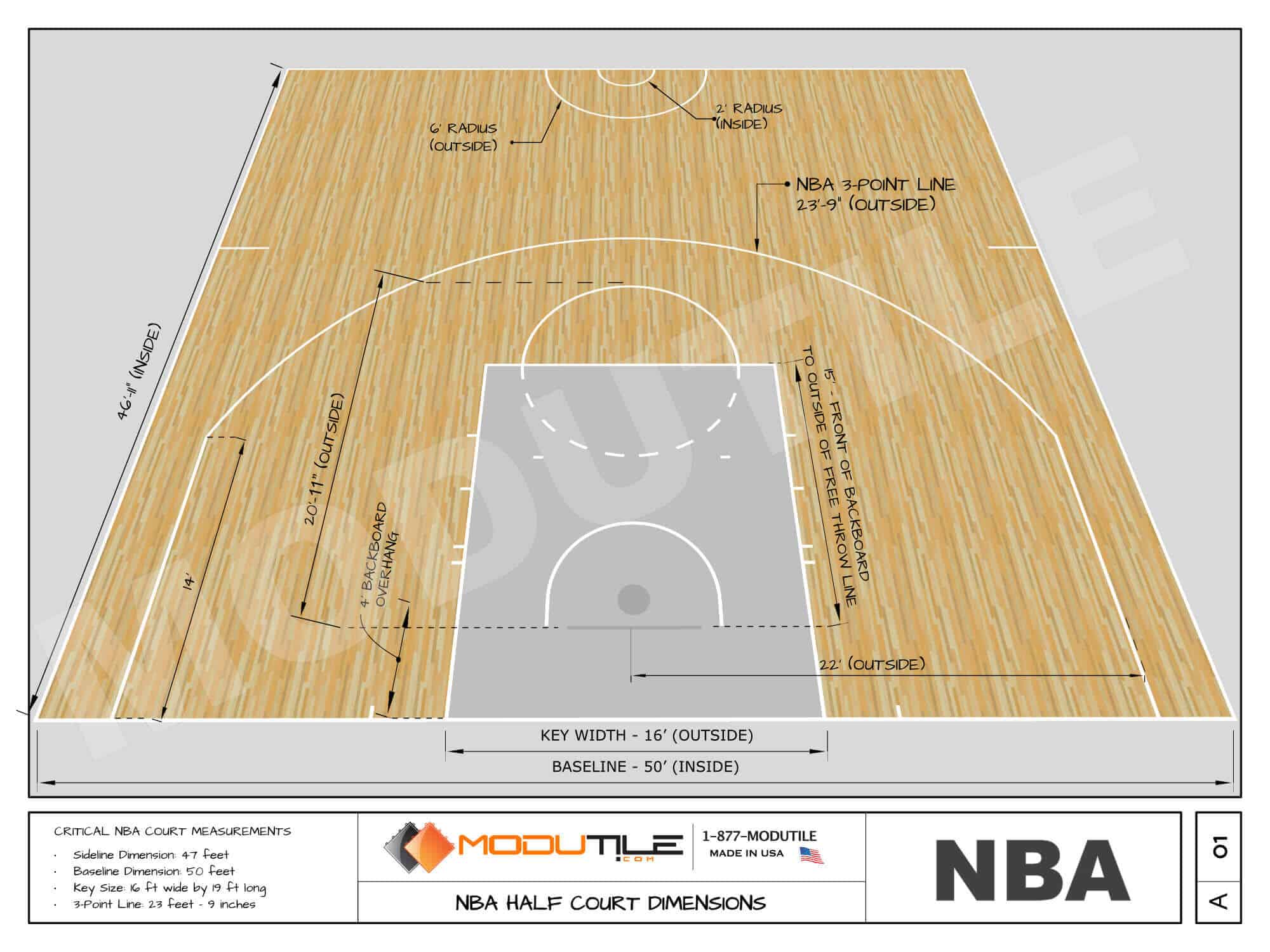
Image Source: modutile.com
Deciphering Basketball Game Length
The thrill of basketball lies in its fast pace and strategic plays. But what exactly dictates the basketball game length? It’s a combination of scheduled playing time and the unpredictable nature of game events. While the clock might show a certain amount of time, the actual duration from tip-off to the final buzzer can be significantly longer due to timeouts, fouls, out-of-bounds plays, and instant replay reviews. Understanding the basketball game structure is key to appreciating the sport’s flow.
The Foundation: Basketball Quarters
At its core, a basketball game is divided into basketball periods, which are commonly referred to as quarters. These quarters provide natural breaks in the action and allow teams to regroup and strategize. The length of these quarters is the most direct determinant of how long a half will be.
Basketball Quarter Duration: A Breakdown
The basketball quarter duration is not uniform across all levels of basketball. Different organizations have established their own standards to suit their specific needs and fan engagement strategies.
- NBA (National Basketball Association): In the NBA, each quarter is 12 minutes long. This means a full NBA game has 48 minutes of scheduled playing time. Therefore, an NBA half, comprising two 12-minute quarters, has 24 minutes of scheduled playing time.
- College Basketball (NCAA): College basketball, particularly at the NCAA Division I level, follows a different format. Each half is divided into two 20-minute periods, totaling 40 minutes of scheduled playing time per game. So, in college basketball, a half is 20 minutes long.
- High School and Youth Basketball: The duration of quarters and halves in high school and youth leagues can vary more widely. Often, quarters are shorter, typically ranging from 6 to 8 minutes, with halves also being adjusted accordingly. These variations are often implemented to accommodate younger players’ attention spans and ensure games don’t run excessively long.
How Long Is A Half in the NBA?
When people ask “how long is a half in basketball,” they often have the NBA in mind due to its global popularity. As mentioned, an NBA half consists of two 12-minute quarters. So, the total playing time within a half is 24 minutes. However, it’s crucial to remember that the NBA game time includes much more than just the playing time on the basketball game clock.
The basketball game clock only stops when the ball is dead, such as during a foul, out-of-bounds, or a timeout. This means that the actual time it takes to complete an NBA half, from the start of the first quarter to the end of the second quarter, can be significantly longer.
Factors Extending NBA Half Time
Several factors contribute to the actual duration of an NBA half beyond the 24 minutes of playing time:
- Timeouts: Teams have a limited number of timeouts per half, which they can call to stop the clock and discuss strategy.
- Fouls and Free Throws: Fouls stop the game clock. Free throw attempts add additional time.
- Out-of-Bounds Plays: When the ball goes out of bounds, the clock stops until the ball is inbounded.
- Half-time Show and Promotions: The break between halves is a significant part of the fan experience. The actual halftime in basketball can last anywhere from 15 to 20 minutes. During this time, there are often entertainment performances, sponsor activations, and player warm-ups.
- Commercial Breaks: Televised games include numerous commercial breaks during stoppages in play, which extend the overall viewing time.
- Reviews and Officials’ Discussions: In-game reviews of plays or discussions among officials can also add to the game’s length.
Therefore, while the scheduled playing time for an NBA half is 24 minutes, the real-time duration from the start of the first quarter to the end of the second quarter can easily be 50 minutes to over an hour, especially when factoring in the official halftime break.
How Long Is A Half in College Basketball?
College basketball operates under a different set of rules regarding game length. In NCAA men’s and women’s basketball, each half is 20 minutes long. This means a college basketball game has a total of 40 minutes of scheduled playing time.
Features of College Basketball Game Time
The structure of college basketball game time also influences the overall duration of a half.
- Two 20-Minute Halves: The basketball period length is 20 minutes for each half.
- Halftime Break: Similar to the NBA, college games also have a halftime break, though its exact duration can vary between regular season games and tournament play. Typically, it’s around 15 minutes.
- Clock Stoppages: The basketball game clock stops for the same reasons as in the NBA: fouls, timeouts, out-of-bounds plays, and reviews.
- Fewer Commercial Breaks (Sometimes): While televised college games also have commercial breaks, they might be slightly less frequent or shorter than in professional leagues, depending on the broadcast deal.
Consequently, a college basketball half, with 20 minutes of playing time, will also take longer than 20 minutes in real-time. The actual duration is often in the range of 40 to 50 minutes, including stoppages.
The Significance of Halftime in Basketball
The halftime in basketball is more than just a pause in the action; it’s a critical juncture in the game. It allows teams to:
- Reassess Strategy: Coaches use this time to analyze their team’s performance, identify weaknesses in the opponent’s play, and adjust tactics for the second half.
- Rest and Rehydrate: Players get a much-needed break to recover physically, rehydrate, and receive treatment if necessary.
- Motivational Boost: Coaches can deliver crucial motivational speeches to inspire their players for the remainder of the game.
- Fan Engagement: As mentioned, halftime is often a period for entertainment and promotions, enhancing the spectator experience.
The duration of the halftime break is standardized to ensure fairness and provide adequate time for these essential activities.
Other Basketball Leagues and Variations
While the NBA and NCAA are the most prominent examples, other basketball leagues and levels of play have their own rules regarding game duration.
- FIBA (International Basketball Federation): FIBA rules, used in international competitions like the Olympics and the FIBA World Cup, typically feature four 10-minute quarters. This results in a total of 40 minutes of playing time. A half in FIBA play would therefore be two 10-minute quarters, totaling 20 minutes of playing time.
- Youth Leagues: As noted, youth leagues often shorten the basketball period length to better suit younger athletes. This might mean 6-minute or 8-minute quarters, leading to shorter halves and overall game times. These adjustments are made to keep games engaging and prevent fatigue.
Visualizing the Game Structure
To further clarify the concept of a half and its components, consider this table:
| Level of Play | Quarter Duration | Number of Quarters per Half | Playing Time per Half | Typical Real-Time Duration of Half (Approx.) |
|---|---|---|---|---|
| NBA | 12 minutes | 2 | 24 minutes | 50-70 minutes |
| NCAA College | 20 minutes | 2 | 40 minutes | 40-50 minutes |
| FIBA International | 10 minutes | 2 | 20 minutes | 35-45 minutes |
| High School (Common) | 8 minutes | 2 | 16 minutes | 30-40 minutes |
Note: “Typical Real-Time Duration of Half” includes scheduled playing time plus typical stoppages and short breaks within the half, but not the official halftime break itself.
The Role of the Basketball Game Clock
The basketball game clock is the central instrument for measuring playing time. It’s a visible countdown that governs the flow of the game. However, its continuous operation is contingent on the ball being in play. When the referee blows the whistle for a stoppage, the clock operator stops the clock. This stop-and-start nature is what makes the actual duration of a half or a full game differ from the sum of its quarter lengths.
Fathoming Overtime in Basketball
What happens if the score is tied at the end of regulation time? Basketball employs overtime periods to break ties.
- NBA Overtime: In the NBA, overtime consists of 5-minute periods. If the game is still tied after the first overtime period, additional 5-minute overtime periods are played until a winner is determined.
- NCAA Overtime: NCAA basketball also uses 5-minute overtime periods to resolve ties.
These overtime periods are crucial for determining the ultimate winner and can significantly extend the overall basketball game length.
Frequently Asked Questions (FAQ)
Here are some common questions about the duration of a basketball half:
Q1: How long is a half in basketball if the clock stops frequently?
A: If the clock stops frequently due to fouls, timeouts, or out-of-bounds plays, a half will take longer than its scheduled playing time. For example, an NBA half with 24 minutes of playing time could take 50-70 minutes in real-time due to these stoppages.
Q2: Is the halftime break included when calculating how long a half is?
A: No, the halftime break is a separate period between the first and second halves of the game. When referring to “how long is a half,” we generally mean the playing time of the two quarters that constitute that half, plus any stoppages within those quarters.
Q3: Do all basketball games have the same half length?
A: No, the length of a half varies by league. NBA halves have 24 minutes of playing time (two 12-minute quarters), while NCAA halves have 40 minutes of playing time (two 20-minute halves, effectively two halves of two 10-minute quarters each). FIBA games typically have 20 minutes of playing time per half (two 10-minute quarters).
Q4: What are the main reasons the actual game time is longer than the scheduled playing time?
A: The primary reasons are stoppages of play. These include:
* Fouls and free throws
* Timeouts called by teams or officials
* Out-of-bounds plays
* Jump balls
* Instant replay reviews
* Injuries
Q5: How is the basketball game clock different from the actual game duration?
A: The basketball game clock measures the active playing time. The actual game duration is the total elapsed time from when the game starts until it ends, which includes playing time, stoppages, timeouts, and the halftime break.
In conclusion, while the definition of a “half” in basketball is straightforward – two quarters of play separated by halftime – the actual time it takes to complete a half is influenced by many factors beyond the pure playing time on the clock. Whether you’re following the fast-paced NBA, the collegiate rivalries of the NCAA, or international competitions under FIBA rules, recognizing these nuances provides a richer appreciation for the dynamic nature of the sport.