
Imagine a world where your phone, computer, and gaming console all speak different languages. Connecting them would be a mess! Thankfully, we have USB interfaces, the universal translators of the tech world. These little ports and cables let all our gadgets talk to each other smoothly. But when you need to buy one, it feels like you’ve landed in a jungle of confusing letters and numbers: USB-A, USB-C, USB 3.0, USB 4. It’s enough to make your head spin, and choosing the wrong one can lead to slow downloads or devices that just won’t connect.
This post will cut through the confusion. We’ll break down what all those USB terms really mean, explaining the differences between them in a way that’s easy to understand. By the end, you’ll know exactly what to look for, whether you’re buying a new flash drive, a charging cable, or connecting your latest gadget. Get ready to become a USB expert!
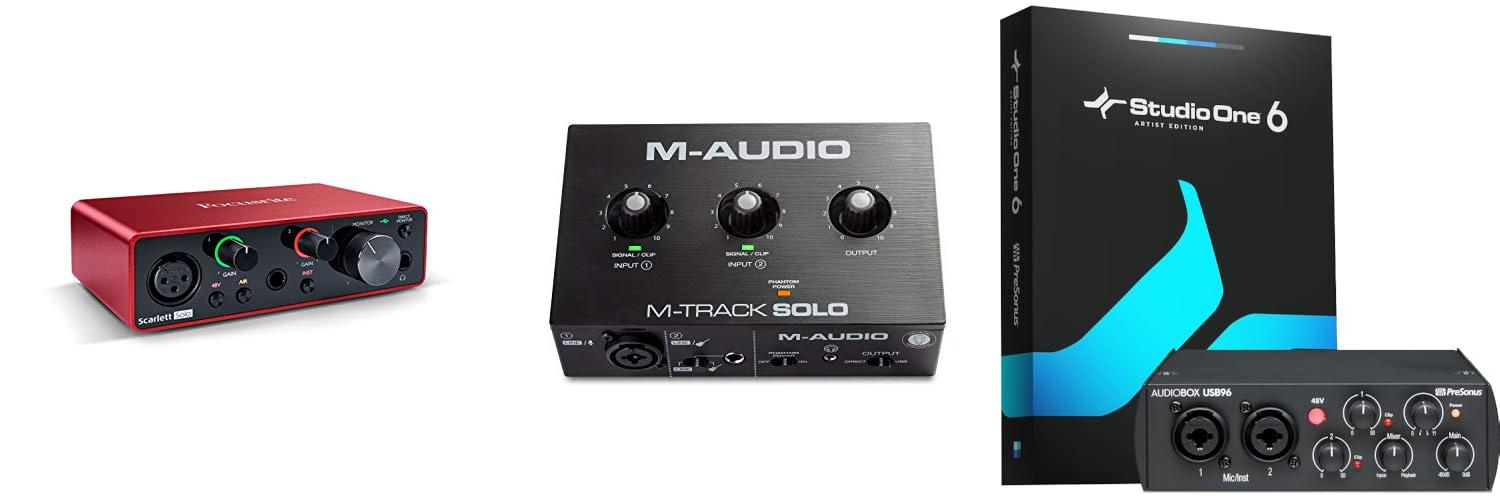
Our Top 5 Usb Interface Recommendations at a Glance
Top 5 Usb Interface Detailed Reviews
1. Focusrite Scarlett Solo 3rd Gen USB Audio Interface for Guitarists

Rating: 8.7/10
Unlock your creative potential with the Focusrite Scarlett Solo 3rd Gen, a powerful USB audio interface designed for anyone looking to record and playback studio-quality sound. Whether you’re a guitarist laying down tracks, a vocalist perfecting your take, a podcaster sharing your voice, or a producer crafting your next hit, the Scarlett Solo 3rd Gen puts professional sound at your fingertips.
What We Like:
- Amazing pre-amps make your recordings sound bright and clear.
- The Air mode adds special clarity to acoustic instruments.
- Two inputs let you plug in your guitar or bass, and Gain Halos prevent unwanted clipping.
- Record and mix music and podcasts in high quality (up to 24-bit/192kHz).
- Low-noise outputs give you crystal-clear playback, so you hear every detail.
- Comes with a fantastic software bundle, including Pro Tools Intro, Ableton Live Lite, and more.
- You get everything you need to start recording right away.
- Focusrite offers a reliable three-year warranty for peace of mind.
What Could Be Improved:
- Some users might find the included software requires a learning curve to master.
- While great for beginners, advanced producers might eventually want more advanced features.
The Focusrite Scarlett Solo 3rd Gen is an excellent starting point for anyone serious about recording. It offers professional sound and a user-friendly experience, making it a fantastic investment for your creative journey.
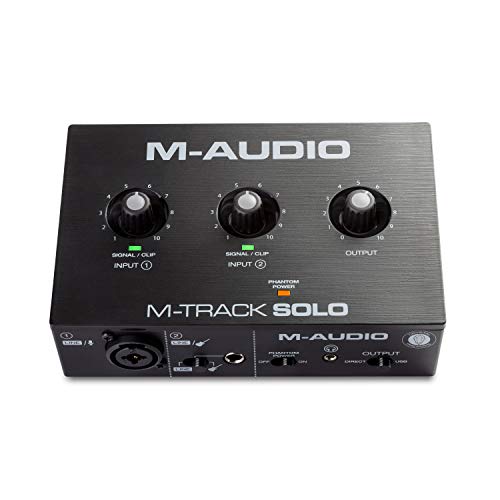
2. M-AUDIO M-Track Solo USB Audio Interface for Recording
Rating: 9.1/10
The M-AUDIO M-Track Solo is a portable USB audio interface that lets you record, stream, and podcast with clear sound. It works with your Mac or PC and gives you 48 kHz audio quality for great recordings. This interface is ready for anything you want to do with your sound.
What We Like:
- It’s super versatile: You can plug in guitars, vocals, or other line-level sounds. It has a combo XLR/Line input with phantom power for microphones, and a separate Line/Instrument input.
- You get clear sound: The Crystal Preamp makes sure your microphones sound their best, even condenser mics.
- Zero-latency monitoring: You can listen to yourself without any delay, which is awesome for recording. It has a headphone jack and RCA outputs for speakers.
- Comes with cool software: You get MPC Beats software, which has essential tools from Akai Professional to help you make music.
- Portable and easy to use: It’s small enough to take anywhere and simple to set up.
What Could Be Improved:
- It only has one combo XLR input, so if you need to record multiple microphones at once, this might not be the best fit.
- The included software, while good, might be a bit basic for very experienced music producers.
For anyone starting out with recording, streaming, or podcasting, the M-Track Solo is a fantastic and affordable option. It offers a lot of features for its price and makes getting great audio simple.
3. PreSonus AudioBox 96 25th Anniversary USB Audio Interface with Studio One Artist DAW Recording Software

Rating: 9.1/10
The PreSonus AudioBox 96 25th Anniversary is a fantastic 2-channel USB audio interface. It’s perfect for anyone wanting to record music, podcasts, or other audio projects. This interface makes it simple to capture great sound right on your computer. It’s a great way to start making your own music!
What We Like:
- It’s a great value for the price.
- It comes with lots of free recording software, like Studio One Artist.
- The mic preamps sound really good.
- You can record guitars and basses easily.
- It’s powered by USB, so you can take it anywhere.
- You can monitor your sound without any delay.
- It has inputs for microphones and instruments.
- It can record in high quality (24-bit/96 kHz).
- It has a headphone jack and output jacks for speakers.
- It has phantom power for condenser mics.
What Could Be Improved:
- The phantom power is global, meaning it’s on for both mics at once.
- The included software is great, but some users might want more advanced features later.
The PreSonus AudioBox 96 25th Anniversary is a powerful and affordable tool for any aspiring audio creator. It’s easy to use and packs a lot of features for the money.
4. MAONO USB Audio Interface for PC: Interface with XLR Input 24-bit/192kHz Routing Software LOOPBACK ASIO Driver for Recording Music

Rating: 8.7/10
The MAONO PS22 Lite Black is a compact USB audio interface designed for aspiring musicians, podcasters, and streamers. It helps you capture clear, high-quality sound for your projects.
What We Like:
- It captures every detail of your sound with 24-bit/192kHz resolution.
- It works great for microphones, offering 56 dB of preamp and 48V phantom power.
- Musicians will love the dedicated instrument input for rich guitar sounds.
- The ProStudio Routing Software gives you control over your streams with virtual channels and loopbacks.
- It’s easy for beginners with intuitive modes and plug-and-play setup.
- The compact design and dynamic light ring make it user-friendly.
- It’s compatible with Mac, Windows, and iPads, plus popular DAWs.
What Could Be Improved:
- The PS22 Lite does not have built-in sound pads for effects.
- Any sound effects like noise reduction or reverb need to be added through DAW software.
This MAONO audio interface is a versatile tool for anyone looking to improve their audio recordings. It offers a great balance of features and ease of use for various creative endeavors.
5. XTUGA USB Audio Interface for PC

Rating: 8.5/10
The XTUGA Q-12 USB Audio Interface is your ticket to making awesome music right from your computer. It lets you easily record singing, guitars, and bass into your music software. You can even plug in a 3.5mm microphone for more options. This little box delivers clear, studio-quality sound, making your recordings sound super professional. It’s also super easy to use, so you can start creating right away!
What We Like:
- It lets you record singing, guitar, and bass directly to your computer for making music.
- You can switch between stereo and mono sound for your line outputs.
- Each channel has its own volume control, so you can fine-tune your sound.
- It supports plugging in guitars or basses directly.
- The gain halo meter shows you if the volume is too high, helping you get the perfect recording level.
- It has a standard XLR input that works with microphones needing 48V phantom power.
- An extra 3.5mm microphone jack adds more recording flexibility.
- It records in high quality up to 16-bit/48 kHz, making your music sound clear and distinct.
- The +48V phantom power is reliable and has very little noise.
- It’s a plug-and-play device, meaning it’s super simple to set up and use.
What Could Be Improved:
- The description mentions a “3.55m Microphone Jack” which might be a typo and is likely a standard 3.5mm jack.
- While it supports beginners, the full capabilities might take a little learning for absolute novices.
The XTUGA Q-12 is a fantastic tool for anyone wanting to step up their home recording game. Its ease of use and quality sound make it a great addition to any beginner or professional studio setup.
Your Essential Guide to USB Interfaces
USB interfaces are everywhere! They connect your computer to all sorts of cool gadgets. Think keyboards, mice, printers, and even your phone charger. This guide will help you pick the best USB interface for your needs.
What is a USB Interface?
A USB (Universal Serial Bus) interface is a port on your computer or device. It lets you plug in other devices. It sends data and power between them. It’s like a universal translator for your electronics.
Key Features to Look For
1. USB Version
- USB 2.0: Older but still common. Good for basic things like keyboards and mice. It’s slower than newer versions.
- USB 3.0 (also called USB 3.1 Gen 1 or USB 3.2 Gen 1): Much faster than USB 2.0. Great for external hard drives and faster data transfers.
- USB 3.1 Gen 2 (also called USB 3.2 Gen 2): Even faster than USB 3.0. Ideal for high-speed storage and demanding tasks.
- USB 3.2 Gen 2×2: The fastest common USB version. It uses two lanes for super-quick data. You’ll need a compatible device to get the full speed.
- USB4: The newest and most powerful. It’s very fast and can handle video and data at the same time. It’s also backward compatible with older USB versions.
2. Connector Type
- USB-A: The classic rectangular plug. Most common on computers and older devices.
- USB-B: Often found on printers and scanners.
- Mini-USB and Micro-USB: Smaller connectors found on older phones, cameras, and some portable devices.
- USB-C: The new, oval-shaped connector. It’s reversible, meaning you can plug it in either way. It’s becoming the standard for newer devices like smartphones, laptops, and tablets. It supports faster speeds and more power.
3. Power Delivery (PD)
Some USB-C ports can deliver more power. This lets them charge larger devices like laptops. Look for PD if you plan to charge your laptop or other power-hungry gadgets through USB-C.
4. Data Transfer Speeds
This is how quickly data moves. Higher speeds mean faster downloads and uploads. Check the USB version to know the potential speed.
Important Materials and Quality
The quality of a USB interface often depends on its build. Good interfaces use sturdy materials. This prevents them from breaking easily.
- Ports: Look for ports that feel solid and don’t wiggle. Metal casings can be more durable.
- Cables: If you’re buying a USB cable, check the thickness and braiding. Thicker cables with braided shielding are often more robust and can handle more bending.
- Internal Components: While you can’t see them, reputable brands use better internal parts. This ensures reliable performance and longevity.
Factors That Improve or Reduce Quality
Things That Improve Quality:
- Shielding: Good shielding in cables and ports reduces interference. This means cleaner data transfer.
- Gold-Plating: Gold-plated connectors resist corrosion. This helps maintain a good connection over time.
- Brand Reputation: Established brands often have better quality control.
Things That Reduce Quality:
- Cheap Materials: Flimsy plastic and thin wires can break easily.
- Poor Construction: Loose connections or poorly soldered parts lead to problems.
- Lack of Shielding: Can cause data errors or slow speeds.
User Experience and Use Cases
How you use a USB interface matters. Think about what you’ll connect and how often.
- Everyday Use: For keyboards, mice, and basic charging, USB 2.0 or 3.0 is usually fine.
- Gamers: Might want faster USB 3.2 or USB4 for gaming accessories that need quick response times.
- Content Creators: Need fast data transfers for video editing or large photo files. USB 3.1 Gen 2, USB 3.2 Gen 2×2, or USB4 are excellent choices for external SSDs.
- Travelers: USB-C with Power Delivery is great for charging multiple devices with one charger.
- Home Office: A good USB hub can expand your ports. This allows you to connect many devices at once.
Choosing the right USB interface makes your tech life smoother. It ensures your devices work well together.
Frequently Asked Questions (FAQs)
Q: What’s the difference between USB 3.0 and USB 3.1?
A: USB 3.1 is actually a newer name for what was previously called USB 3.0 (now USB 3.2 Gen 1). It offers the same speed. Newer versions like USB 3.1 Gen 2 (now USB 3.2 Gen 2) are faster.
Q: Can I plug a USB 3.0 device into a USB 2.0 port?
A: Yes, you can. The device will work, but it will only run at USB 2.0 speeds. It won’t be as fast.
Q: What does “reversible” mean for USB-C?
A: It means you don’t have to worry about which way to plug it in. The USB-C connector works no matter which side is up.
Q: Do I need special cables for USB 3.0 or faster?
A: Yes, for the best speeds, you should use cables rated for the specific USB version you are using (e.g., a USB 3.0 cable for a USB 3.0 port).
Q: What is USB Power Delivery (PD)?
A: Power Delivery is a feature, usually on USB-C, that allows for much higher power transfer. This lets you charge larger devices like laptops.
Q: How do I know if my computer has USB 3.0 or newer ports?
A: Look for the small symbol next to the port. USB 3.0 ports are often blue. Newer versions might have a “SS” (SuperSpeed) symbol.
Q: Can I use a USB hub to get more ports?
A: Yes, a USB hub lets you connect multiple devices to a single USB port on your computer. Make sure the hub supports the USB version you need.
Q: Are all USB-C cables the same?
A: No. Some USB-C cables only support charging, while others support high-speed data transfer and video output. Always check the cable’s specifications.
Q: Is USB4 better than Thunderbolt?
A: USB4 is very capable and often uses Thunderbolt technology. For most users, USB4 offers excellent performance. Thunderbolt is still a top choice for professionals needing the absolute highest speeds and features.
Q: Where should I plug in my external hard drive?
A: For the fastest speeds, plug your external hard drive into a USB 3.0 port or higher. This will make transferring files much quicker.
In conclusion, every product has unique features and benefits. We hope this review helps you decide if it meets your needs. An informed choice ensures the best experience.
If you have any questions or feedback, please share them in the comments. Your input helps everyone. Thank you for reading.