
Yes, you absolutely can double-team a player in basketball. It’s a fundamental basketball defensive strategy used to disrupt an opponent’s offense, often employed against a star player or to prevent easy scoring opportunities. This in-depth guide will explore the nuances of when and how to effectively double-team, the strategies involved, and the crucial elements of successful execution.
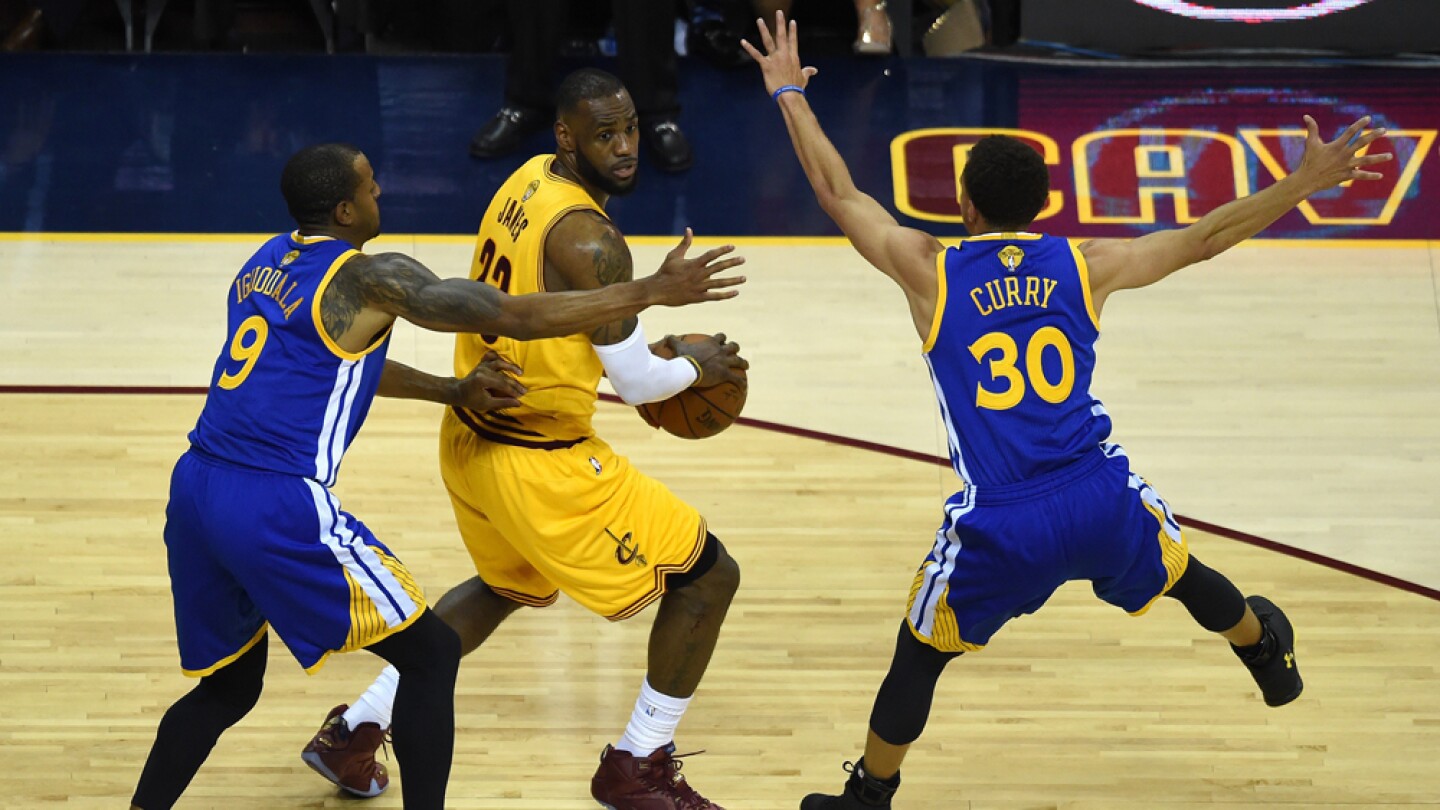
Image Source: nbcsports.brightspotcdn.com
Fathoming the Double Team: A Defensive Tactic
A double-team in basketball involves two defenders actively guarding a single offensive player. The primary goal is to force the ball away from that player, make them uncomfortable, and create turnovers or difficult shots. While powerful, it’s a high-risk, high-reward tactic that requires careful consideration and excellent team coordination. Poorly executed double-teams can lead to open shots for other players and easy baskets for the offense.
Why Double Team? Strategic Objectives
The decision to double-team a player isn’t arbitrary. Several strategic objectives drive this defensive choice:
- Neutralizing a Star Player: The most common reason is to limit the impact of a dominant offensive player. If one player is consistently scoring or creating for others, a double-team can force them to pass the ball, breaking their rhythm and preventing them from controlling the game.
- Preventing Easy Scoring: Against players who excel at driving to the basket or have a strong post-up game, a double-team can clog the paint and make it much harder to score close to the hoop.
- Forcing Turnovers: The pressure of two defenders can lead to mistakes. A well-timed double-team can force a player to travel, commit a carrying violation, or throw an errant pass, resulting in a steal.
- Disrupting Offensive Flow: Even if a turnover doesn’t occur immediately, a double-team can force the offense out of its planned sets. Players have to react, pass, and move in ways they might not have anticipated, disrupting their offensive flow and forcing them to play faster.
- Creating Ball Pressure: In certain situations, a double-team can be part of a broader strategy to apply intense ball pressure all over the court, forcing the opposing team to work harder to advance the ball.
When to Deploy the Double Team: Situational Awareness
The effectiveness of a double-team hinges on timing and recognizing the right situations. Here are key moments to consider:
- Against a Dominant Scorer: If a particular player is having a hot streak or is a known offensive threat, they become a prime target for a double-team.
- In the Post: When a player receives the ball in the low post and has an immediate scoring advantage, a double-team from an adjacent defender can be crucial.
- On the Pick and Roll: Defending the pick and roll often involves decisions about how to guard the ball handler and the screener. Sometimes, a double-team on the ball handler as they come off the screen can be effective.
- When Trapped: A double-team is a form of trapping. If a player is isolated on the perimeter with a clear path to the basket, a double-team can trap them and force a decision.
- To Protect the Paint: If the opposing team is particularly good at attacking the paint, a double-team can be used to overload that area.
- Late in Close Games: In crucial moments of a close game, a double-team might be used to prevent the opposing team’s best player from taking the final shot or making a critical play.
Key Basketball Defensive Principles in Double-Teaming
Successful double-teaming relies on solid basketball defensive principles:
- Communication is Paramount: Defenders must talk to each other constantly. The player guarding the ball needs to alert their teammate to the impending double-team, and the “helper” needs to communicate their position and intent.
- Proper Rotations: This is the most critical element. When two players commit to double-teaming, other defenders must rotate to cover the open spaces. A breakdown in rotations will lead to easy baskets for the offense.
- Anticipation: Defenders need to anticipate passes and the offensive player’s next move. This allows for timely double-teams and cuts off passing lanes.
- Effort and Energy: Double-teaming requires significant effort. Defenders must be willing to work hard, close out quickly, and sprint to cover open areas.
- Decision-Making: Knowing when to commit to a double-team and when to recover is vital. Over-committing can be just as detrimental as not double-teaming at all.
Mastering the Double Team: Strategic Implementations
There are various ways to implement a double-team, each with its own strategic advantages and considerations.
Trapping in Basketball: The Aggressive Double Team
Trapping is a more aggressive form of double-teaming, often executed on the perimeter. The goal is to trap the ball handler in a specific area of the court, typically near the sideline or baseline, with the intention of forcing a turnover.
Common Trapping Scenarios:
- Sideline Traps: When the ball handler is dribbling near the sideline, the defender on the ball aggressively pushes them towards the sideline, while another defender quickly closes the angle from the middle of the court. This traps the player between two defenders and the sideline, limiting their passing options.
- 3/4 Court Traps: Applied earlier in the offensive half, this aims to disrupt the offense before they can even set up their plays. It’s high-risk, high-reward, as a missed trap can lead to an easy advantage for the offense.
- Pick and Roll Traps: The defense may decide to trap the ball handler coming off a screen, forcing them to give up the ball quickly before they can make a play.
Considerations for Trapping:
- Escape Lanes: The trapping defenders must prevent the offensive player from easily dribbling out of the trap. This means cutting off their escape routes.
- Passing Lanes: While trapping, defenders must also anticipate and clog potential passing lanes to teammates.
- Rotations: This is where defensive rotations are absolutely crucial. If the ball handler passes out of the trap, the defenders who were trapping must recover quickly, and the other three defenders must rotate to cover the open spaces.
Pick and Roll Defense and Double-Teaming
The pick and roll is a common offensive action that often presents opportunities or necessitates double-teaming.
Defensive Schemes Against the Pick and Roll:
- “Show” or “Hedge”: The defender guarding the screener momentarily steps out to impede the ball handler’s progress, “showing” them where the screen is happening, then recovers back to their man. This isn’t a full double-team but a temporary disruption.
- “Hoping” or “Going Under”: The defender guarding the ball handler dribbles under the screen. This is often used against poor three-point shooters but can be vulnerable to mid-range jumpers or pick-and-pop plays.
- “Switching”: Defenders guarding the ball handler and the screener swap assignments. This eliminates the immediate screen but can lead to mismatches.
- “Trapping” or “Blitzing”: This is where the double-team comes into play. The defender guarding the ball handler stays with them, while the defender guarding the screener aggressively attacks the ball handler, forcing them to pass.
When to double-team on a pick and roll:
- Against a Dynamic Ball Handler: If the ball handler is a strong scorer or passer off the screen, doubling them can be effective.
- To Prevent the “Pop”: If the screener is a threat to roll to the basket or pop out for a jump shot, doubling the ball handler can force them to make a quicker decision.
- When the Offensive Team is Predictable: If the offense relies heavily on a specific pick-and-roll action, a well-timed double-team can disrupt their go-to play.
Zone Defense and Double-Teaming
While man-to-man defense is often associated with aggressive double-teaming, zone defenses can also incorporate elements of it, albeit in a different manner.
- “Packing the Paint” in Zone: In a zone defense, defenders are responsible for areas rather than specific players. If the ball enters a particular area, two defenders might converge on the ball handler, especially in the paint, to prevent easy layups. This creates a temporary double-team within the zone structure.
- “Rotations” in Zone: The success of any zone defense relies heavily on smooth defensive rotations. When one defender leaves their zone to help on the ball, another defender must shift to cover the vacated space. This is analogous to the rotations needed in man-to-man double-teams.
Man-to-Man Defense and Double-Teaming
Man-to-man defense is the most common context for deliberate double-teaming.
- Targeting a Specific Player: In man-to-man, the decision to double-team is usually focused on a single offensive player who is posing a significant threat.
- “On-Ball” vs. “Off-Ball” Double Teams:
- On-Ball Double Team: Both defenders are directly guarding the ball handler. This is typically a trap.
- Off-Ball Double Team: One defender guards the ball handler, and the second defender is positioned nearby, ready to “dig” at the ball, deny a pass, or quickly help if the ball handler drives past the first defender. This is often seen when guarding a post player.
Switching Defense and the Double Team
Switching defense, where defenders swap assignments on screens, can sometimes involve elements that resemble a double-team, but it’s a distinct strategy.
- The “Soft Switch”: The defender guarding the screener briefly delays the ball handler before the switch occurs. This can look like a brief double-team.
- The “Hard Switch”: Defenders immediately swap assignments. There’s no intentional double-team.
The decision to switch is often made to avoid being caught out of position by a screen or to maintain defensive integrity. While a switch can prevent a double-team opportunity, it doesn’t actively implement one in the same way.
The Crucial Element: Defensive Rotations
As highlighted throughout, defensive rotations are the linchpin of any successful double-team strategy. Without them, the tactic falls apart.
How Rotations Work in a Double Team:
Imagine Player A is being double-teamed by Defenders X and Y.
- Player A is the “trapped” player.
- Defender X is the “on-ball” defender.
- Defender Y is the “help” defender.
Now, consider the other three offensive players (Players B, C, and D) and the three remaining defenders (Defenders Z, W, and V).
- Player A passes the ball.
- The pass goes to Player B.
- Defender Z, who was guarding Player B, must now “close out” to contest Player B’s shot or drive.
- Defender W, who was guarding Player C, must shift over to cover the area that Defender Z vacated, providing help defense if Player B drives past Z.
- Defender V, who was guarding Player D, must shift over to cover the area that Defender W vacated.
- Crucially, Defenders X and Y, who were double-teaming Player A, must now recover to their original assignments (or at least get back into defensive position). Defender X might now guard Player C (if W is covering B), and Defender Y might guard Player D (if V is covering C).
This requires immense coordination, communication, and trust among all five defenders. Each player must know their responsibility and react instinctively.
Common Rotation Mistakes:
- Slow Rotations: Defenders are too slow to close out or shift, allowing the offense to catch the ball in open space.
- “Bailing Out”: Defenders who were part of the double-team don’t recover quickly enough, leaving their assigned player open.
- Poor Communication: Defenders don’t call out screens, switches, or who is responsible for whom after a rotation.
- Over-Helping: Defenders leave their assignments to “help” too much on the ball, creating even larger gaps elsewhere.
- Getting Caught on the Wrong Side: Defenders don’t position themselves correctly to contest shots or prevent drives after rotations.
When Not to Double Team: Risks and Countermeasures
Double-teaming is not a universal solution. Several factors can make it a poor choice:
- Poor Shooters on the Floor: If the opposing team has multiple good three-point shooters on the floor, doubling any player can leave one of those shooters open.
- Lack of Defensive Rotation: If your team struggles with communication and defensive rotations, attempting double-teams will likely lead to easy baskets for the opponent.
- Fatigue: Aggressive double-teaming requires a lot of energy. If your players are tired, they won’t be able to execute it effectively, and the risk of breakdowns increases.
- Player Mismatches: If the player being double-teamed is an exceptional passer, they can exploit the double-team by finding the open man. The defenders covering those open men must be capable of defending their assignments.
- “Horns” or “Elbow” Sets: Certain offensive sets are designed to exploit double-teams. For example, if you double a post player, the guard on the weak side might flash to the high post for an easy pass and shot.
Countering the Double Team: Offensive Strategies
An offense that can effectively counter a double-team can turn a defensive strength into an offensive advantage.
- Quick Passes: The most basic counter is to make quick, sharp passes out of the double-team. This forces the defense to shift rapidly.
- Backdoor Cuts: If the defense overplays the ball, cutters can exploit the space behind them for easy layups.
- Screening the Trappers: Offensive players can set screens on the defenders who are doubling, either freeing up the player with the ball or creating confusion.
- “Skip Passes”: A long pass across the court from one side to the other can bypass the double-team and catch the defense out of position.
- “Short Roll” or “Pop”: If the screener’s defender helps on the double-team, the screener can roll to the basket or pop out to the free-throw line area for an open shot.
Examples in Action: Observing Basketball Defensive Strategies
To truly grasp the nuances of double-teaming, observing professional or high-level collegiate basketball is invaluable. Pay attention to:
- Which players are being double-teamed: Is it always the star player, or are there other strategic targets?
- The context of the double-team: Is it a trap on the perimeter, a post double, or a reaction to a pick and roll?
- The defensive rotations: How do the other defenders shift and cover the open spaces? Do they communicate effectively?
- The offensive response: How does the offense react to the double-team? Do they make quick passes, backdoor cuts, or skip passes?
Table 1: Common Defensive Strategies and Double-Team Involvement
| Defensive Strategy | Double-Team Potential | Primary Goal | Key Considerations |
|---|---|---|---|
| Man-to-Man Defense | High | Guarding individual players, limiting their effectiveness | Communication, rotations, assignment responsibility |
| Zone Defense | Moderate | Protecting areas of the court, clogging the paint | Ball movement, passing lane denial, rapid rotations to cover gaps |
| Switching Defense | Low | Maintaining defensive integrity on screens, avoiding mismatches | Can create temporary confusion that resembles a double, but is not the primary intention |
| Trapping (Perimeter) | High | Forcing turnovers, disrupting ball handlers | Precise positioning, quick closing speed, understanding escape routes, critical rotations |
| Help Defense | Moderate | Providing assistance to a defender being beaten | Timeliness, not over-committing, understanding when to recover to original assignment |
| Pick and Roll Defense | High (specific types) | Disrupting the pick and roll action | Choice of defense (hedge, switch, trap), communication between defenders, screener’s defender’s responsibility |
Frequently Asked Questions (FAQ)
Q1: Is it always a foul when two defenders guard one player?
No, it is not always a foul. A foul occurs if the defenders play overly physically, reach in excessively, or make illegal contact with the offensive player. Simply having two defenders on the ball handler is not inherently a foul if the play is legal.
Q2: When is the best time to double-team a player?
The best time is generally when an opponent’s player is a significant scoring threat, they are isolated and have an advantage, or when you want to force a turnover in a specific situation. It’s also effective against predictable offensive actions.
Q3: What are the biggest risks of double-teaming?
The biggest risks are leaving another offensive player open for an easy shot or drive due to poor defensive rotations, and the offensive team exploiting the double-team with quick passes and cuts.
Q4: How does a team practice double-teaming effectively?
Teams practice double-teaming through drills that focus on:
* Communication between defenders.
* Proper footwork and positioning for the trapping defenders.
* Quick closing speed for the “help” defender.
* Simulated defensive rotations to practice recovering to open spots.
* “Shell drills” that simulate game conditions for all five players.
Q5: Can you double-team in the post?
Yes, double-teaming in the post is a very common strategy. When a post player receives the ball with their back to the basket and has an advantage, a second defender often comes from the “help” side to deny easy post-up moves or passes.
Q6: What is the difference between help defense and a double-team?
Help defense is when a defender leaves their man to assist a teammate who is in a difficult defensive situation. A double-team is a deliberate strategy to have two defenders actively guard the ball handler or a specific offensive player. Help defense can lead to a double-team if the help defender closes in aggressively.
In conclusion, the double-team is a powerful tool in a basketball team’s defensive arsenal. However, its effectiveness is entirely dependent on discipline, communication, and flawless defensive rotations. Mastering this tactic requires extensive practice and a deep comprehension of basketball defensive principles, turning potential liabilities into formidable defensive assets.