
What is taking a charge in basketball? Taking a charge is a defensive maneuver where a player intentionally positions themselves in the path of an offensive player who is driving to the basket, forcing the offensive player to initiate contact and draw an offensive foul, typically called a charging foul. Can you win games by taking charges? Absolutely. Drawing a charge is a vital basketball strategy that can swing momentum, prevent easy baskets, and put your team in a better position to win.
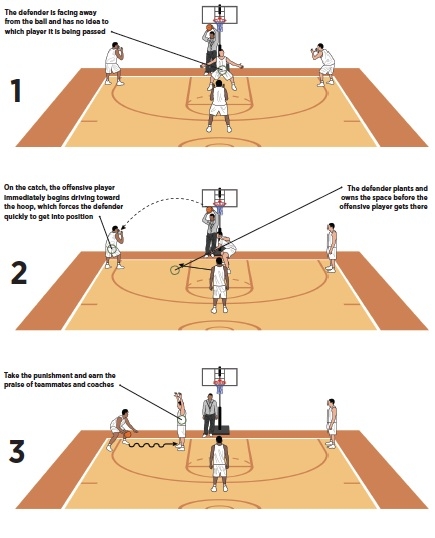
Image Source: d3rqy6w6tyyf68.cloudfront.net
The Art of the Charge: More Than Just Standing Still
Taking a charge is a nuanced skill that requires excellent defensive positioning, timing, and courage. It’s not simply about planting your feet and hoping for the best. It’s about controlling the situation and forcing the offensive player into a violation. This guide will break down the essential elements of mastering this crucial defensive play, offering expert tips to help you become a charge-drawing machine and contribute to your team’s victory.
Fathoming the Fundamentals: What Constitutes a Charge?
Before you can master taking a charge, you need a solid grasp of what the basketball rules define as a charging foul. At its core, a charge occurs when an offensive player with possession of the ball moves into a stationary defender who has established legal guarding position.
Key elements that typically lead to a charge call:
- Stationary Defender: The defender must be established and not moving illegally.
- Initiating Contact: The offensive player must be the one to initiate the contact.
- Driving to the Basket: The offensive player is usually attempting to score or penetrate the defense.
- Legal Guarding Position: The defender must be between the offensive player and the basket.
It’s important to note that referees have discretion in calling charges, and borderline plays can go either way. However, by understanding the core principles and executing them effectively, you can significantly increase your chances of benefiting from these calls.
The Strategic Advantage: Why Draw Charges?
Drawing a charge isn’t just about preventing points; it’s a multifaceted basketball strategy that offers several significant advantages:
- Preventing Easy Baskets: The most obvious benefit is stopping the opponent from scoring. Instead of giving up a layup or a foul shot, you force an offensive foul, resulting in a turnover and possession for your team.
- Gaining Possession: A charge results in a turnover, giving your team the ball back. This can be crucial for regaining momentum or running down the clock.
- Foul Trouble for Opponents: Every charging foul counts against the offensive player and their team. Drawing charges can put key offensive players in foul trouble, limiting their aggressiveness and playing time.
- Momentum Swings: A well-timed charge can electrify the crowd and inject energy into your team. Conversely, it can deflate the opposing team.
- Psychological Impact: Consistently drawing charges can make offensive players more hesitant to drive, altering their attack and making them predictable.
Deciphering Defensive Positioning: The Foundation of a Charge
Defensive positioning is paramount when aiming to draw a charge. You need to be in the right place at the right time, with the right body mechanics.
Establishing Legal Guarding Position
This is the bedrock of blocking a charge. A defender has legal guarding position when:
- They are facing the offensive player.
- They have established two feet on the floor.
- They are within the visual range of the offensive player.
It’s crucial to be stationary or moving backwards or sideways to meet the offensive player. Moving forward into the offensive player as they are moving is generally an offensive foul.
Footwork and Body Control
- Solid Base: Keep your feet shoulder-width apart or slightly wider. This provides stability and makes it harder for the offensive player to push you off your spot.
- Knees Bent: Maintain a low center of gravity by bending your knees. This allows for quick adjustments and absorbs impact better.
- Arms Up (but not flailing): Keep your arms up, but not extended too far forward, to avoid goaltending or blocking fouls. The goal is to present a legal barrier.
- Head Up: Always keep your head up and eyes on the offensive player. This allows you to anticipate their move and react accordingly.
The Timing is Everything: When to Make Your Move
Timing is the secret sauce to drawing a charge. You can’t just stand there; you need to anticipate the offensive player’s drive.
Reading the Offensive Player
- Body Language: Watch the offensive player’s eyes and shoulders. If they are looking to drive, their body will often lean in that direction.
- Dribble Progression: A player committed to driving will typically take a purposeful dribble, often a “pound dribble,” before attacking the basket.
- Head and Shoulders: Observe where their head and shoulders are directed. This often indicates their intended path.
The “Move In” Moment
The optimal time to move into position and establish your base is just as the offensive player begins their drive. You want to meet them with your established position, not chase them or move into their path as they are already in motion.
- Anticipate the Drive: If you see the signs of a drive, start subtly shifting your weight and preparing to pivot.
- Pivot and Establish: As they begin to move, pivot to face them and plant your feet firmly. This is your cue to become a stationary obstacle.
- Avoid Lunging: Lunging forward into the offensive player is a common mistake and often results in a blocking foul, not a charge.
Blocking the Charge: The Defensive Technique
Blocking a charge is the active part of taking a charge. It involves using your body legally to impede the offensive player’s progress.
The Body Check
- Chest to Chest: Aim to have your chest or torso meet the offensive player’s chest or torso. This is the most legal and effective point of contact.
- Absorb the Impact: Brace yourself for contact. Keep your core tight and your legs strong to absorb the force.
- Hands: Keep your hands visible and ideally by your sides or in a defensive stance, not reaching for the ball or the offensive player. Reaching can lead to fouls.
What to Avoid: The Pitfalls of Taking a Charge
- Moving Feet: Do not move your feet backward or sideways after the offensive player has initiated contact and is in your space. This is a common reason why a charge isn’t called.
- Flailing Arms: Wildly swinging your arms can result in reaching fouls or even flagrant fouls. Keep your arms controlled.
- Hands on Hips/Waist: While some players might try to subtly hip-check, using your hands to push or hold the offensive player is illegal and will not draw a charge.
- Being Too Far Away: If you are too far from the offensive player when they initiate contact, it will likely be called a blocking foul. You need to be in their immediate path.
- Setting Illegal Screens: This is a critical distinction. While you are establishing a defensive position, you are not setting a screen in the offensive sense. An illegal screen involves moving picks or screens that aren’t set. Your defensive stance should not resemble an offensive screen.
The Nuances of Drawing a Charge: Advanced Tactics
Once you’ve mastered the fundamentals, consider these advanced tactics to elevate your charge-drawing game.
Defensive Anticipation and Positioning
- Knowing Your Opponent: If you know a particular offensive player tends to drive hard to the basket or is prone to weaker left-hand drives, you can position yourself to anticipate these moves.
- Help Defense: If you are the help defender, be aware of the primary defender’s position. If the offensive player drives past the primary defender, be ready to step up and establish your position to draw a charge.
- Cutting Off Angles: Sometimes, by subtly cutting off the offensive player’s direct path to the basket, you can force them to initiate contact slightly wider, making the charge call more likely.
The “Sell” Factor (Ethically)
While not about faking, there’s a subtle “selling” that can help the referees see the play correctly. This isn’t about flopping, but about reacting naturally to the contact.
- Controlled Reaction: When contact occurs legally, a slight recoil or bracing yourself can emphasize the impact.
- No Dramatics: Avoid excessive falling or exaggerating the contact. This can lead to a charge being not called or even a defensive foul.
- Eye Contact: Sometimes, a quick glance at the referee as contact is made can help draw their attention to the play.
Setting a Screen vs. Drawing a Charge: The Crucial Distinction
It’s vital to differentiate between setting a screen and taking a charge.
- Setting a Screen: This is an offensive action where a player uses their body to impede a defender’s movement, freeing up a teammate. It requires specific rules about stationary position and not initiating contact.
- Drawing a Charge: This is a defensive action. While you are establishing a stationary position, your intent is to be a legal barrier against a driving offensive player. The contact is initiated by the offensive player. Your position is defensive; you are not screening an opponent for a teammate.
The Role of the Referee and Basketball Rules
Understanding how referees interpret basketball rules is key to successful charge-taking.
- Three-Second Violation: A defender cannot remain in the lane for more than three seconds unless they are actively guarding an offensive player. This doesn’t directly relate to taking a charge but is part of general defensive rules.
- Blocking Foul: This is the most common foul called instead of a charge. It typically occurs when a defender moves into an offensive player who is not yet in their established space, or when a defender is not stationary and initiates contact.
- Reaching Foul: Occurs when a defender extends their arms and makes contact with the offensive player while trying to steal the ball.
Key Considerations for Referees:
- Who Initiated Contact? This is the primary question.
- Was the Defender Stationary? Did they have legal guarding position?
- Was the Defender Beating the Offensive Player to the Spot? If the offensive player was already there, and the defender moved into them, it’s likely a block.
Practice Drills for Charge Taking
To improve your ability to draw a charge, dedicated practice is essential.
Drill 1: Stationary Charge Drill
- Have a teammate drive towards you.
- You establish a stationary defensive position.
- Your teammate attempts to drive through you.
- Focus on absorbing the contact with a solid base and bent knees.
- Practice pivoting to face the driver as they approach.
Drill 2: Drive and Pivot Drill
- Your teammate starts with the ball on the perimeter.
- They simulate a drive.
- As they begin to drive, you pivot to meet them and establish your defensive position.
- The driver can choose to continue driving or pass. If they drive, focus on drawing the charge.
Drill 3: Game Simulation
- In a controlled scrimmage, actively look for opportunities to draw charges.
- Communicate with your teammates about defensive positioning and help defense.
- Review game film to identify missed opportunities or incorrect positioning.
When Charges Might Not Be Called
Even with perfect execution, there are times when a charge might not be called, and it’s important to be aware of these situations.
- ** Offensive Player Stops or Changes Direction:** If the offensive player stops abruptly or changes direction before making contact, it can be difficult for the referee to rule it a charge, even if you are in position.
- Defender Moves Late: If you move into the offensive player’s path after they have committed to their drive and are in the act of shooting or finishing, it may be called a blocking foul.
- Contact is Minimal or Incidental: If the contact is very light or seems incidental, referees may let the play continue, especially in fast-paced games.
- Bad Angle for the Referee: Referees are human. Sometimes, they might not have the best angle to see who initiated contact.
The Impact on Your Team’s Defensive Intensity
Consistently taking charges signals a high level of defensive commitment and awareness. It shows that players are willing to sacrifice their bodies for the team. This can:
- Inspire Teammates: When one player is willing to draw a charge, it can encourage others to be more aggressive defensively.
- Build Defensive Identity: A team known for its ability to draw charges develops a reputation for toughness and smart defense.
- Improve Overall Defensive Awareness: Practicing charge-taking hones a player’s ability to anticipate offensive moves and maintain proper defensive positioning.
Common Mistakes and How to Avoid Them
Let’s revisit some common errors and how to prevent them.
- Mistake: Lunging forward to take the charge.
- Avoidance: Focus on establishing a stationary base before the offensive player reaches you. Pivot to meet them.
- Mistake: Arms flailing or reaching.
- Avoidance: Keep arms controlled, visible, and ideally close to your body.
- Mistake: Moving feet after contact is initiated.
- Avoidance: Once you’ve established your position and contact occurs, stay planted.
- Mistake: Not being in the offensive player’s path.
- Avoidance: Anticipate the drive and position yourself directly in their intended trajectory.
- Mistake: Jumping to take the charge.
- Avoidance: Always maintain a solid two-foot base on the floor for stability and legal guarding.
Charge vs. Foul: Knowing the Difference
Here’s a simple table to highlight the key differences:
| Feature | Charge (Offensive Foul) | Blocking Foul (Defensive Foul) |
|---|---|---|
| Initiator of Contact | Offensive player drives into stationary defender. | Defender moves into an offensive player. |
| Defender’s Position | Stationary, legal guarding position established. | Moving, not established in a legal guarding position. |
| Outcome | Turnover, possession to defense. | Foul on defender, possession for offense (or free throws). |
| Intent of Defender | To be a legal stationary barrier. | (Accidental) or illegal impediment of offensive player. |
| Common Scenario | Driving player runs into a set defender. | Defender tries to “beat” the offensive player to a spot. |
The Role of the “Charge” in Different Leagues
The interpretation and frequency of charge calls can vary slightly between different basketball leagues, such as NBA, NCAA, and high school.
- NBA: The NBA tends to have a higher emphasis on player safety and the flow of the game. While charges are still called, referees might be slightly more lenient on borderline calls, and offensive players may have more freedom of movement. The contact tends to be more controlled.
- NCAA/High School: In these leagues, referees often have a closer eye on defensive positioning and the initiation of contact. Players are often encouraged to be aggressive in drawing charges, and calls might be more frequent for clean plays.
Conclusion: Mastering the Charge for Victory
Mastering the art of drawing a charge is an invaluable skill for any defensive player. It requires dedication to defensive positioning, sharp timing, and a willingness to be physical within the rules. By understanding the nuances of blocking a charge, avoiding common mistakes, and practicing consistently, you can significantly impact your team’s performance. A well-executed charge not only prevents points but also creates turnovers, puts opponents in foul trouble, and swings momentum – all critical factors in winning basketball games. Embrace the strategy, hone your technique, and become a defensive force that opponents dread driving against.
Frequently Asked Questions (FAQ)
Q1: What happens if the referee doesn’t call a charge?
If a referee doesn’t call a charge, and you believe one should have been whistled, you must accept the call and focus on the next play. Arguing with the referee is rarely productive and can lead to technical fouls. Instead, analyze the situation afterward to see if your positioning or timing was off.
Q2: Can you take a charge on a player who is not driving to the basket?
Generally, charges are called on offensive players who are driving towards the basket or attempting to score. If an offensive player is simply standing or moving laterally without a clear intent to attack the basket, and contact occurs with a stationary defender, it is more likely to be called a blocking foul on the defender, or no call at all.
Q3: What’s the difference between a charge and an illegal screen?
An illegal screen is an offensive foul committed when a player setting a screen moves their feet or initiates contact with the defender before establishing a stationary position. Taking a charge is a defensive maneuver where a defender legally establishes position and the offensive player initiates contact while driving.
Q4: How can I improve my balance when taking a charge?
Improving your balance starts with a strong core and well-bent knees. Keep your feet planted firmly on the floor, shoulder-width apart. Focus on absorbing the impact through your legs and core, rather than just your upper body. Drills that emphasize bracing for contact can help build this strength and stability.
Q5: Is it legal to extend your arms slightly when taking a charge?
It is generally legal to have your arms in a defensive position, which might involve them being slightly extended, as long as they are not reaching for the ball or actively holding the offensive player. The key is that your arms are not the primary cause of the foul. The offensive player should be initiating contact with your body.