
Can you coach youth basketball effectively? Yes, you absolutely can coach youth basketball effectively by focusing on fundamental skills, positive reinforcement, and age-appropriate drills. Coaching young basketball players is a rewarding experience that can shape their athletic development and love for the game.
Coaching young basketball players can be a fantastic journey. It’s about more than just winning games; it’s about fostering a love for basketball, teaching valuable life lessons, and helping kids grow both on and off the court. If you’re new to coaching or looking to refine your approach, this guide will equip you with the knowledge and tools to coach youth basketball effectively. We’ll delve into essential basketball skills, practical drills, and key coaching philosophies for developing young basketball talent.
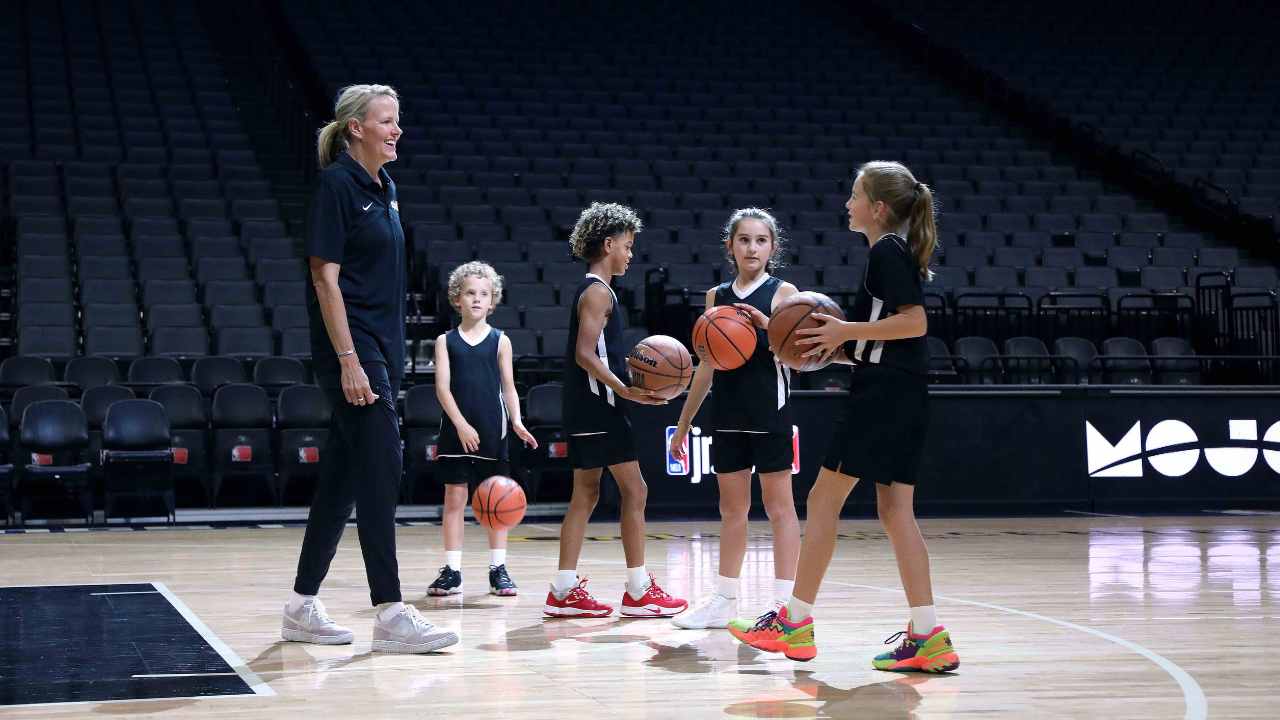
Image Source: www.mojo.sport
Laying the Foundation: Core Basketball Skills for Kids
Before diving into complex strategies, it’s crucial to master the basics. Teaching basketball fundamentals is the bedrock of successful youth basketball coaching. These fundamental skills, when honed, will serve players throughout their basketball careers.
Dribbling Prowess
Dribbling is the ability to control the ball while moving. For young players, this means developing a feel for the ball and confidence in keeping it close.
- Ball Control: Teach players to keep their dribble low, between their knees and waist, to protect it from defenders.
- Using Fingertips: Emphasize using fingertips, not the palm, for better control and feel.
- Head Up: The most critical aspect of dribbling is to look up, allowing players to see the court, their teammates, and the basket.
Shooting Mechanics
A good shot starts with proper form. Even at a young age, establishing good shooting habits is vital for developing their basketball skill development for kids.
- B.E.E.F. Acronym: This is a classic and effective way to remember the key elements:
- Balance: Feet shoulder-width apart, knees slightly bent.
- Eyes: Focus on the rim.
- Elbow: Keep the shooting elbow tucked in, forming an “L” shape.
- Follow-Through: Extend the shooting arm towards the basket, flicking the wrist like reaching into a cookie jar.
- Repetition: Consistent practice with proper form is key.
Passing Precision
Basketball is a team sport, and effective passing is essential for moving the ball and creating scoring opportunities.
- Chest Pass: A fundamental pass, thrown from the chest to the chest of the receiver.
- Bounce Pass: Useful for passing under outstretched arms of defenders.
- Overhead Pass: Good for longer distances or passing over smaller defenders.
- Accuracy and Timing: Teach players to pass to a target (the receiver’s hands) and to lead their teammates.
Defensive Fundamentals
Playing defense is as important as offense. Teaching young players to defend their opponents sets them up for success.
- Stance: A low, balanced stance with knees bent, feet wide, and arms out.
- On-Ball Defense: Staying between the offensive player and the basket, mirroring their movements.
- Off-Ball Defense: Keeping an eye on both the ball and their assigned player, being ready to help.
Engaging Youth Basketball Drills: Making Practice Fun and Effective
To impart these skills, you need engaging youth basketball drills that are not only instructional but also enjoyable. Variety keeps players motivated.
Dribbling Drills
These drills help build ball-handling confidence and control.
H3: Cone Weaving
- Objective: Improve dribbling control and agility.
- Setup: Arrange cones in a straight line or zigzag pattern.
- Execution: Players dribble through the cones, keeping the ball low and their head up. They can dribble with their dominant hand, then their non-dominant hand, or alternate hands between cones.
- Variations: Add a second ball for advanced players, or have them change pace between cones.
H3: Stationary Dribbling Series
- Objective: Develop ball feel and control without movement.
- Execution:
- Low Dribble: Dribble as low as possible, focusing on fingertip control.
- High Dribble: Dribble at waist height, practicing quick changes of direction.
- Cross-Overs: Practice front cross-overs, behind-the-back dribbles, and between-the-legs dribbles while stationary.
- Two-Ball Dribbling: Dribble two balls simultaneously, alternating or coordinating dribbles. This is excellent for coordination.
H3: Dribble Tag
- Objective: Enhance dribbling while evading a defender.
- Setup: Divide players into pairs. One player (the dribbler) has a ball. The other player (the tagger) tries to tag the dribbler’s arm or shoulder.
- Execution: The dribbler must protect the ball and evade the tagger using their dribbling skills. The tagger cannot steal the ball, only tag.
- Focus: Encourage head-up dribbling and quick directional changes.
Shooting Drills
Building consistent shooting form requires focused practice.
H3: Form Shooting (Close Range)
- Objective: Reinforce proper shooting mechanics without the distraction of distance.
- Setup: Players stand close to the basket (within 5-10 feet).
- Execution: Players focus solely on their B.E.E.F. form, making sure each shot has a good follow-through. The goal is to feel the ball arc and spin correctly. Players can take several shots from one spot before moving.
- Coaching Tip: Emphasize the follow-through and shooting with touch.
H3: Spot Shooting
- Objective: Develop shooting accuracy from various locations on the court.
- Setup: Designate several shooting spots on the court (e.g., elbows of the key, wings, corners).
- Execution: Players move to a spot, catch the ball, and shoot using proper form. After making a set number of shots (e.g., 5) or taking a set number of attempts, they move to the next spot.
- Youth Basketball Offensive Strategies Integration: This drill can be adapted to include catching and shooting off a pass, which is a key offensive action.
H3: Layup Lines
- Objective: Master the fundamental layup, a crucial scoring tool.
- Setup: Players line up at both wings of the free-throw line.
- Execution: Players dribble towards the basket, perform the correct footwork (e.g., right-hand layup: dribble with right hand, take two steps: left, right, shoot with right hand; left-hand layup: dribble with left hand, two steps: right, left, shoot with left hand), and finish with a soft touch.
- Progression: Start with uncontested layups, then introduce a passive defender or a simple block attempt.
Passing Drills
Good passing leads to better teamwork and more scoring chances.
H3: Partner Passing
- Objective: Improve accuracy and coordination in basic passes.
- Setup: Players pair up, facing each other at a designated distance (e.g., 10-15 feet).
- Execution: Players practice chest passes, bounce passes, and overhead passes to their partner. They should focus on making strong, accurate passes and receiving them cleanly.
- Variations: Increase the distance, add movement (players jog in place while passing), or incorporate a defensive element where one player tries to intercept.
H3: Three-Person Weave
- Objective: Develop communication, passing accuracy, and offensive flow.
- Setup: Three players start at one baseline, spread out across the court.
- Execution: Player 1 passes to Player 2, who catches and passes to Player 3. Player 1 then runs behind Player 3. Player 3 passes to Player 2 (now ahead), who passes to Player 1 (now ahead). They continue weaving up the court, always passing to the player ahead of them and running behind them.
- Coaching Tip: Emphasize making crisp passes and moving after passing.
Defensive Drills
Teaching good defensive habits is crucial for any youth basketball practice plans.
H3: Defensive Slides
- Objective: Improve defensive footwork and agility.
- Setup: Players get into a defensive stance.
- Execution: Players slide laterally across a designated area (e.g., from one sideline to another, or across the lane). They must stay low, keep their feet wide, and not cross their feet.
- Progression: Add a coach or another player in front who is moving, forcing the sliding player to mirror their movements.
H3: Closeout Drill
- Objective: Teach players how to properly close out on an offensive player with the ball.
- Setup: Player 1 is in a defensive stance. Player 2 starts a few feet away with the ball.
- Execution: Player 2 dribbles slowly towards Player 1. Player 1 “closes out” by taking controlled, choppy steps towards Player 2, ending in a balanced defensive stance with one hand up to contest a shot and the other ready to deflect a pass. Player 1 should not lunge or go for the steal immediately.
- Focus: Emphasize control and balance.
H3: 2-on-2 or 3-on-3 Defense
- Objective: Practice defensive concepts in a game-like situation.
- Setup: Two or three offensive players vs. two or three defensive players.
- Execution: Defenses must communicate, stay between their man and the basket, and help each other when necessary.
- Youth Basketball Defensive Strategies: This is a great way to teach principles like rotating, boxing out, and help-side defense.
Developing Young Basketball Talent: Beyond the Drills
Coaching goes beyond just running drills. It involves creating a positive environment and fostering growth.
Positive Reinforcement and Motivation
Children respond best to encouragement.
- Praise Effort: Acknowledge and praise hard work and good attempts, even if the outcome isn’t perfect.
- Constructive Criticism: When correcting mistakes, offer specific advice in a supportive tone. Instead of “Don’t miss that shot,” try “Try to keep your elbow tucked and follow through with your fingertips.”
- Celebrate Small Victories: Highlight improvements and good plays, no matter how small.
Age-Appropriate Coaching
What works for a 14-year-old might not work for a 7-year-old.
- Younger Players (Ages 6-9): Focus on fun, basic motor skills, and introducing the ball. Short, simple games and lots of positive feedback are key. Keep practices short and engaging.
- Middle Schoolers (Ages 10-13): Begin to introduce more formal skill development, basic offensive and defensive concepts, and teamwork. Practices can be longer, but still need to maintain energy and fun.
- Older Players (Ages 14+): Can handle more complex strategies, conditioning, and advanced skill refinement.
Teamwork and Sportsmanship
Basketball is a team game. Instill the importance of playing together and treating opponents, coaches, and officials with respect.
- Encourage Communication: Players should talk on defense and call for the ball on offense.
- Teach Respect: Emphasize shaking hands after games, congratulating opponents, and accepting referees’ calls gracefully.
- Emphasize the Process: Focus on improvement and effort rather than solely on wins and losses.
Structuring Youth Basketball Practice Plans
A well-organized practice plan ensures that time is used effectively and that all aspects of the game are covered. Here’s a sample structure:
H3: Sample Practice Plan (60 Minutes)
| Time | Activity | Objective | Skills Focus |
|---|---|---|---|
| 0-10 min | Dynamic Warm-up & Ball Handling | Prepare body, introduce ball feel | Agility, Dribbling (low, control) |
| 10-25 min | Skill Focus 1 (e.g., Shooting) | Improve shooting form and accuracy | B.E.E.F., Form Shooting, Layups |
| 25-40 min | Skill Focus 2 (e.g., Passing) | Enhance passing accuracy and decision-making | Chest Pass, Bounce Pass, Partner Passing |
| 40-50 min | Game Application | Integrate skills into game-like situations | Youth basketball offensive strategies, 3-on-3 |
| 50-55 min | Defensive Focus | Reinforce defensive stance and footwork | Defensive Slides, Closeouts |
| 55-60 min | Cool-down & Wrap-up | Active recovery, review, positive reinforcement | Teamwork, Sportsmanship |
Table 1: Sample Youth Basketball Practice Plan
This is a template, and you can adjust it based on the specific needs and skill level of your team. For example, if your team struggles with dribbling, dedicate more time to dribbling drills.
Common Challenges and Basketball Coaching Tips for Kids
As a coach, you’ll encounter common hurdles. Here are some basketball coaching tips for kids to navigate them:
- Short Attention Spans: Keep drills varied and engaging. Incorporate small games and competitions within drills.
- Skill Inconsistency: Repetition is key. Encourage players to practice outside of practice time.
- Lack of Enthusiasm: Make practice fun! Use music, positive reinforcement, and reward effort.
- Parental Involvement: Communicate clearly with parents about team goals, practice schedules, and expectations.
Frequently Asked Questions (FAQ)
Q1: How often should youth basketball teams practice?
A1: For most youth leagues, 1-2 practices per week is standard. The duration should be appropriate for the age group, typically 60-75 minutes.
Q2: What is the most important skill to teach young basketball players?
A2: While all fundamentals are important, dribbling with their head up is arguably the most critical skill for young players. It allows them to see the court and make better decisions.
Q3: How do I handle a player who is not as skilled as others?
A3: Focus on their effort and incremental progress. Provide extra encouragement and simplified instruction. Pair them with a more skilled player during drills for peer learning. Celebrate their improvements.
Q4: Should I focus on winning or development in youth basketball?
A4: Development should always be the primary focus. While a competitive spirit is good, the goal at this age is to teach skills, build character, and foster a love for the game, not just to win.
Q5: How can I teach youth basketball offensive strategies effectively?
A5: Start with simple concepts like passing and moving without the ball. Introduce basic offensive plays like a simple give-and-go or a screen away. Gradually increase complexity as players develop their skills and comprehension.
Q6: What are some youth basketball defensive strategies for beginners?
A6: Focus on fundamental defensive principles: staying in a good stance, keeping the ball on one side of the offensive player, and not reaching. Teach the concept of “help defense” – being in a position to help a teammate if they get beaten.
By implementing these strategies and drills, you can effectively coach youth basketball, fostering skill development and a lifelong appreciation for the sport in young athletes. Remember, patience, positivity, and a focus on fundamental basketball skill development for kids are your most valuable coaching tools.