
A basketball half is 20 minutes of playing time in professional leagues like the NBA and college basketball. In contrast, FIBA (international basketball) and high school games have different durations for their halves.
The duration of a basketball game is a fascinating aspect of the sport, often leading to questions about how each segment contributes to the overall contest. At its core, a basketball half represents half of the total playing time in a regulation game. However, the precise length of this half can vary depending on the league and governing body. This detailed exploration will break down the different timings, rules, and factors that influence how long a basketball half truly is.
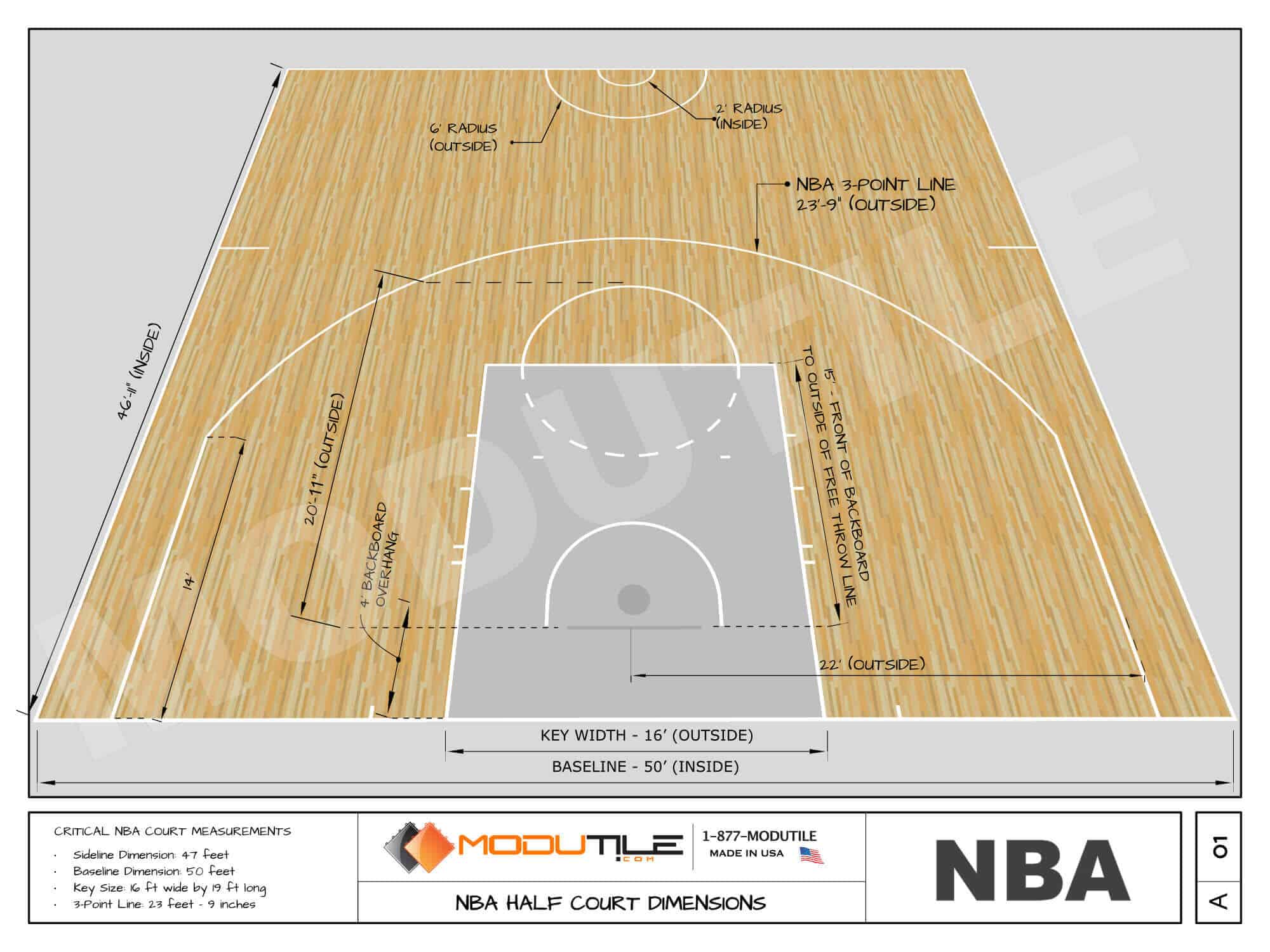
Image Source: modutile.com
Deciphering Basketball Game Structure
The foundation of any basketball match lies in its basketball game structure. This structure dictates the flow of play, the breaks within the game, and ultimately, the total basketball playing time. Most professional and amateur basketball games are divided into two halves, with each half further subdivided into shorter periods.
How Many Quarters in Basketball?
While a half is a significant segment, it’s important to acknowledge the underlying structure. In most popular basketball formats, a full game is divided into four quarters. These quarters are the primary building blocks of the game. For example, in the NBA and college basketball, there are four 12-minute and 10-minute quarters, respectively. FIBA and high school basketball also use a four-quarter system, but with different durations.
NBA Game Duration: A Closer Look
The National Basketball Association (NBA) is the premier professional basketball league in the world. An NBA game duration is typically divided into four 12-minute quarters. Therefore, a single basketball quarter length in the NBA is 12 minutes.
This means that a regulation NBA game duration consists of 48 minutes of actual playing time. Consequently, an NBA basketball half is comprised of two of these quarters.
NBA Half-Time Breakdown
An NBA basketball half is 24 minutes of playing time (12 minutes per quarter x 2 quarters). However, the actual time from the start of the first quarter to the end of the second quarter, including breaks, is significantly longer.
- First Quarter: 12 minutes of play.
- End of First Quarter Break: A short break, typically 2 minutes.
- Second Quarter: 12 minutes of play.
- Half-Time: This is the main break between the first and second halves of the game. In the NBA, the college basketball half time is often compared to this, though NBA half-time is longer. An NBA half-time break is officially 15 minutes long.
Therefore, while the basketball playing time for an NBA half is 24 minutes, the total duration from the tip-off of the first quarter to the end of the second quarter, including breaks, is approximately 32 minutes (12 + 2 + 12 + 15 = 41 minutes, but the break between quarters is shorter). The full duration of a basketball game in the NBA, including all stoppages, timeouts, and breaks, can easily extend to over two hours, sometimes reaching two and a half hours or more. This extended basketball match length is due to the numerous breaks and strategic stoppages.
College Basketball Half Time: Differences from the NBA
In college basketball, the basketball quarter length differs from the NBA. College games, governed by the NCAA, are played in two 20-minute halves. This means that a college basketball half time is a 20-minute period of actual play.
College Basketball Half-Time Breakdown
- First Half: 20 minutes of play.
- Half-Time Break: Similar to the NBA, there’s a designated break between halves. However, the college basketball half time break is typically 15 minutes.
- Second Half: 20 minutes of play.
So, in college basketball, a basketball half is 20 minutes of basketball playing time. The total regulation basketball playing time for a college game is 40 minutes (20 minutes per half x 2 halves). The overall duration of a basketball game in college, including breaks, is generally shorter than an NBA game, often around 1 hour and 45 minutes to 2 hours.
FIBA Game Time: International Standards
FIBA (Fédération Internationale de Basketball) sets the rules for international basketball competitions, including the Olympics and World Cup. The FIBA game time also follows a specific structure.
FIBA Half-Time Breakdown
FIBA games are played in four 10-minute quarters. This means a FIBA game time quarter is shorter than in the NBA or college.
- First Quarter: 10 minutes of play.
- End of First Quarter Break: A short break, similar to NBA.
- Second Quarter: 10 minutes of play.
- Half-Time: The FIBA game time half-time break is typically 15 minutes.
Therefore, a basketball half in FIBA play consists of 20 minutes of basketball playing time (10 minutes per quarter x 2 quarters). The total regulation basketball playing time for a FIBA game is 40 minutes. The overall duration of a basketball game under FIBA rules, including breaks, is generally similar to college basketball, often around 1 hour and 45 minutes to 2 hours. This makes the basketball match length competitive with NCAA games.
High School Basketball Game Length: Youth Development
High School basketball game length often mirrors college rules in its structure but may have slight variations in actual clock stoppages. Typically, high school games are also played in two 20-minute halves, meaning each basketball half is 20 minutes of playing time.
High School Half-Time Breakdown
- First Half: 20 minutes of play.
- Half-Time Break: The high school basketball game length usually includes a half-time break that is shorter than professional or college games, often around 10 minutes.
- Second Half: 20 minutes of play.
This results in a total of 40 minutes of basketball playing time for a regulation high school game. The overall duration of a basketball game at the high school level, factoring in breaks, is often the shortest among the discussed levels, typically around 1 hour and 30 minutes to 1 hour and 45 minutes. This makes the basketball match length more accessible for younger athletes.
Factors Affecting the Duration of a Basketball Game
Beyond the regulation playing time, several factors can extend the duration of a basketball game, making the basketball match length longer than anticipated. These are critical to fathoming the complete basketball game structure.
Stoppages and Timeouts
Basketball is a game of continuous action punctuated by frequent stoppages. These include:
- Fouls: Personal fouls, technical fouls, and flagrant fouls all lead to free throws or possession changes, stopping the clock.
- Out of Bounds: When the ball goes out of bounds, the clock stops until the ball is inbounded.
- Violations: Traveling, double dribble, and other violations result in a turnover and a stopped clock.
- Timeouts: Each team has a set number of timeouts per half and per quarter (in some leagues). Coaches use these to strategize, rest players, or stop an opponent’s momentum. These significantly add to the overall NBA game duration and other league game durations.
- Jump Balls: While less common once possession is established, they stop the clock.
- Substitutions: While many substitutions can happen during natural breaks, some might occur mid-action, leading to minor stoppages.
Free Throws
Free throws are a critical part of basketball that also impacts game duration. When a player is fouled in the act of shooting or after a certain number of team fouls have been accumulated, they are awarded free throws. Each free throw is a dead-ball situation where the clock is stopped. Multiple free throws can significantly lengthen a segment of the game.
End of Quarter/Half Stoppages
As mentioned in the breakdowns, there are short breaks at the end of the first and third quarters. These are officially timed but are much shorter than the main half-time break.
Overtime
If a game is tied at the end of regulation play, overtime periods are played. In most leagues, overtime periods are typically 5 minutes of playing time. If the game remains tied after the first overtime, additional overtime periods are played until a winner is determined. This can drastically extend the duration of a basketball game and the basketball match length.
Comparing Basketball Half Lengths Across Leagues
To clearly illustrate the differences, here’s a table summarizing the key aspects of a basketball half across different levels:
| Feature | NBA | College Basketball | FIBA | High School Basketball |
|---|---|---|---|---|
| Quarter Length | 12 minutes | N/A (2 halves) | 10 minutes | N/A (2 halves) |
| Half Length | 24 minutes playing time | 20 minutes playing time | 20 minutes playing time | 20 minutes playing time |
| Total Playing Time | 48 minutes | 40 minutes | 40 minutes | 40 minutes |
| Half-Time Break | 15 minutes | 15 minutes | 15 minutes | ~10 minutes |
| Game Structure | 4 quarters | 2 halves | 4 quarters | 2 halves |
This comparison highlights how the basketball game structure leads to different timings for a basketball half. While the playing time for a half is 24 minutes in the NBA, it’s 20 minutes in college, FIBA, and high school. This difference primarily stems from the basketball quarter length in the NBA versus the two-half structure in other leagues.
Frequently Asked Questions (FAQ)
Here are some common questions regarding the duration of a basketball half:
Q1: What is the standard length of a basketball half in minutes?
A: The standard length of a basketball half in terms of actual basketball playing time is 20 minutes for college, FIBA, and high school basketball. For the NBA, a half is 24 minutes of playing time (two 12-minute quarters).
Q2: How long is the half-time break in basketball?
A: The half-time break is typically 15 minutes in the NBA, college basketball, and FIBA games. High school games may have a shorter half-time break, often around 10 minutes.
Q3: Does the clock stop during a basketball half?
A: Yes, the clock stops frequently during a basketball half for fouls, violations, out-of-bounds plays, timeouts, and at the end of quarters. This is why the actual game duration is much longer than the total basketball playing time.
Q4: Is the duration of a basketball game always the same?
A: No, the duration of a basketball game can vary due to factors like overtime periods, the number of timeouts called, and the frequency of stoppages. The basketball match length can therefore be quite variable.
Q5: Why do NBA games have longer halves than college games?
A: NBA games are structured with four 12-minute quarters, resulting in 24 minutes of playing time per half. College games are played in two 20-minute halves. This difference in the basketball quarter length is the primary reason for the variation in half duration.
Q6: What is the total playing time for a basketball game?
A: The total regulation basketball playing time is 48 minutes for the NBA and 40 minutes for college, FIBA, and high school games.
Q7: Can a basketball half end early?
A: In very rare circumstances, a game might be called or suspended due to unforeseen events. However, under normal play, each half is played to its full duration unless there’s a significant forfeit or disqualification.
Conclusion
Fathoming the exact length of a basketball half requires looking beyond a simple number. It’s a combination of regulation basketball playing time, league-specific rules, and the inherent stoppages of the game. Whether it’s the 24 minutes of playing time in an NBA half or the 20 minutes in college, FIBA, or high school, each segment contributes to the overall excitement and strategy that defines a basketball match length. By appreciating the different basketball game structure and the factors influencing the duration of a basketball game, fans can gain a deeper appreciation for the sport.