
So, how much does a basketball court cost? The price of a basketball court can range from a few hundred dollars for a portable hoop and a painted driveway to tens of thousands, or even hundreds of thousands, for a professionally built indoor facility. The cost depends heavily on factors like size, materials, location, and whether it’s an indoor or outdoor court.
Building a basketball court is a significant investment, whether it’s for your home, a school, a park, or a commercial facility. The basketball court cost is influenced by a wide array of elements, from the very ground it sits on to the final coat of paint. This comprehensive guide aims to demystify the pricing structure, giving you a clear picture of what to expect. We’ll delve into the specifics of outdoor basketball court pricing, indoor basketball court installation cost, residential basketball court cost, and commercial basketball court pricing, providing a detailed breakdown for each.
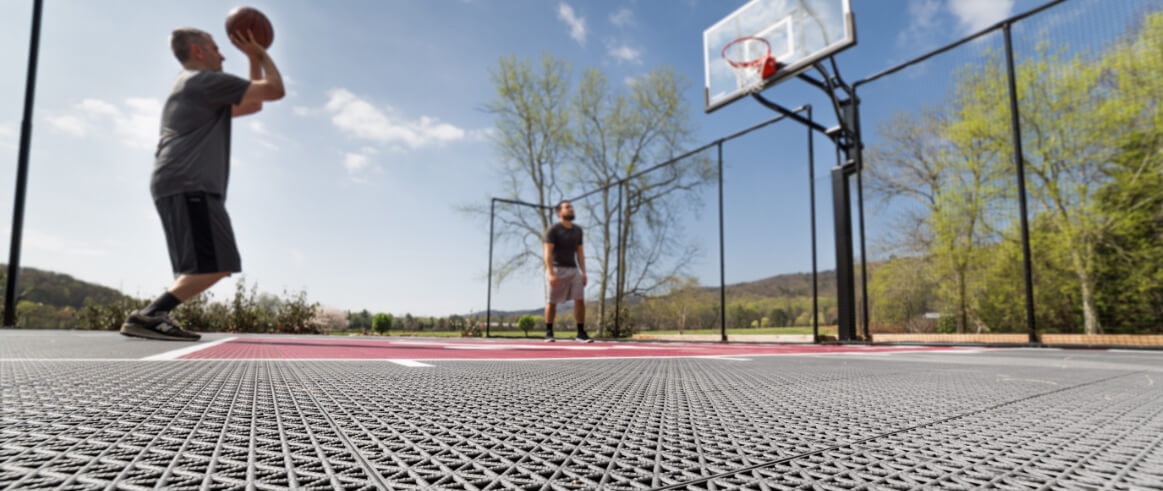
Image Source: cdn.versacourt.com
Deciphering the Costs: Key Factors Influencing Basketball Court Prices
Several crucial factors contribute to the overall basketball court construction cost. Understanding these will help you budget effectively and make informed decisions.
1. Court Size and Dimensions
The most obvious factor is the size of the court. A full-sized regulation basketball court is 94 feet long and 50 feet wide for professional and college play, and 84 feet long by 50 feet wide for high school games. Smaller courts, often found in residential settings or for multi-purpose use, will naturally cost less.
- Regulation Size: Requires more materials, more labor, and a larger footprint, significantly increasing the price.
- Half-Court: A more economical option, especially for residential use, cutting material and labor costs roughly in half.
- Custom Sizes: Can be tailored to fit available space, but pricing will scale with the total square footage.
2. Surface Material: The Foundation of Your Court
The choice of surface material is one of the most significant cost drivers. Each material offers different benefits in terms of durability, playability, and price.
Outdoor Basketball Court Surfaces
- Plexipave and Acrylic Coatings: These are very popular for outdoor courts, especially those intended for serious play.
- Plexipave basketball court cost: Typically falls in the range of $3 to $8 per square foot for the material itself. This includes multiple layers of acrylic for color, texture, and cushioning.
- Benefits: Excellent traction, vibrant colors, good ball bounce, durable against weather.
- Considerations: Requires a solid, well-prepared base (like asphalt or concrete).
- Asphalt: A common and relatively affordable option for outdoor courts.
- Cost: Can range from $2 to $5 per square foot for installation, including the asphalt itself.
- Benefits: Durable, good for general play, can be painted.
- Considerations: Can crack over time, requires regular maintenance and sealing.
- Concrete: Another durable option, though often more expensive upfront than asphalt.
- Cost: Typically $4 to $7 per square foot for installation.
- Benefits: Very strong, long-lasting, can be colored or textured.
- Considerations: Can crack if not properly installed with expansion joints, requires sealing.
- Modular Tiles (Polypropylene/Plastic): These interlocking tiles offer a versatile and often lower-maintenance option.
- Cost: Varies widely, but generally from $5 to $15 per square foot.
- Benefits: Good drainage, shock absorption, easy to install and replace damaged sections, available in various colors.
- Considerations: Can be more expensive than painted surfaces for larger areas, may fade in direct sunlight over many years.
Indoor Basketball Court Surfaces
Indoor courts typically use specialized flooring designed for athletic performance.
- Hardwood (Maple): The gold standard for professional and collegiate play due to its bounce and feel.
- Cost: This is the most expensive option, ranging from $10 to $25+ per square foot. The cost includes the wood, subfloor system, installation, and finishing.
- Benefits: Superior shock absorption, excellent ball response, classic aesthetic.
- Considerations: Requires careful climate control, susceptible to moisture damage, high maintenance costs.
- Synthetic Vinyl/Rubber Flooring: A more durable and lower-maintenance alternative to hardwood, popular in schools and recreation centers.
- Cost: Generally $5 to $15 per square foot, depending on thickness and brand.
- Benefits: Excellent shock absorption, slip-resistant, available in many colors and designs, easy to clean.
- Considerations: May not offer the same premium feel as hardwood.
3. Sub-base Preparation and Grading
A properly prepared sub-base is crucial for the longevity and playability of any court. This involves excavating the site, grading the land to ensure proper drainage, and laying down a foundation of gravel and asphalt or concrete.
- Excavation and Grading: Can cost $1 to $3 per square foot, depending on the existing site conditions and the amount of earthwork required.
- Gravel Base: Typically $0.50 to $1.50 per square foot.
- Asphalt Base: As mentioned, $2 to $5 per square foot.
- Concrete Base: As mentioned, $4 to $7 per square foot.
Poor sub-base preparation can lead to cracking, uneven surfaces, and poor drainage, all of which will shorten the court’s lifespan and lead to more costly repairs down the line.
4. Basketball Hoops and Accessories
The cost of the basketball system is another significant factor.
- Portable Basketball Hoops: These can range from $100 for basic models to $1,000+ for higher-end, stable systems with adjustable height and durable backboards.
- In-Ground Systems: These are permanently installed and offer greater stability.
- Residential Grade: Typically $300 to $800.
- Durable/Professional Grade: Can range from $800 to $3,000+, including reinforced backboards (glass or acrylic), sturdy poles, and high-quality rims.
- Professional/Commercial Grade Systems: Often built for heavy use and may include features like breakaway rims and shatterproof backboards. Expect to pay $1,500 to $5,000 or more per hoop.
- Backboards:
- Acrylic: $100 – $400
- Tempered Glass: $300 – $1,000+
- Polycarbonate: $150 – $500
- Rims:
- Standard: $30 – $70
- Breakaway: $70 – $200+
- Nets: $10 – $30
- Accessories: Lighting, fencing, benches, scoreboards, and padding for poles will add to the overall cost.
5. Lighting and Fencing
- Lighting: If you plan to play after dark, lighting is essential.
- Cost: Can range from $1,000 to $5,000+ for a basic setup with a few poles and floodlights. Professional, high-intensity lighting systems for larger courts can cost upwards of $10,000.
- Fencing: To contain stray balls and provide a dedicated playing area.
- Cost: A simple chain-link fence around a residential court might cost $500 to $2,000. Commercial or park installations with higher fencing and gates can cost $5,000 to $15,000+.
6. Labor and Installation
The cost of labor is a substantial portion of the total price, especially for professional installations. This includes site preparation, surface installation, hoop mounting, and any additional features.
- DIY vs. Professional: A DIY approach can save on labor costs, but it requires significant time, effort, and specialized knowledge. Professional installers ensure the court is built to standard and will last longer.
- Geographic Location: Labor rates vary significantly by region.
- Complexity: Intricate designs, specific grading requirements, or challenging site access will increase labor costs.
Pricing Breakdown: Different Types of Basketball Courts
Let’s break down the estimated costs for various types of basketball courts. These are general estimates, and actual prices can vary widely.
Residential Basketball Court Cost
For homeowners looking to add a court to their property, costs are typically lower than for commercial facilities.
- Half-Court with Portable Hoop:
- Surface: Painted asphalt or concrete driveway segment.
- Hoop: Mid-range portable hoop.
- Estimated Cost: $500 – $2,000 (primarily for the hoop and potentially some driveway repair/painting).
- Half-Court with In-Ground Hoop (DIY):
- Surface: Painted asphalt or concrete pad.
- Hoop: Basic to mid-range in-ground system.
- Labor: Your own.
- Estimated Cost: $1,000 – $4,000 (for materials and hoop).
- Full-Court with In-Ground Hoop (Professional Installation):
- Surface: Professionally installed asphalt or concrete, with acrylic coating.
- Hoop: Quality in-ground system.
- Labor: Professional installation.
- Estimated Cost: $20,000 – $50,000+ (depending on size, materials, and site prep).
Outdoor Basketball Court Pricing
Outdoor courts are generally less expensive than indoor courts due to simpler construction and fewer climate control requirements.
- Basic Painted Asphalt Court (DIY):
- Surface: Existing asphalt, repainted lines.
- Hoop: Simple in-ground hoop.
- Estimated Cost: $300 – $1,500 (for paint and hoop).
- Plexipave Coated Court (Professional Installation):
- Surface: Asphalt base with multiple layers of Plexipave coating.
- Hoop: Quality in-ground system.
- Dimensions: Standard high school size (84′ x 50′).
- Estimated Cost: $25,000 – $60,000 (includes sub-base prep, asphalt, Plexipave, and two hoops).
- Modular Tile Court (Professional Installation):
- Surface: Interlocking high-impact polypropylene tiles.
- Hoop: Quality in-ground system.
- Dimensions: Standard high school size (84′ x 50′).
- Estimated Cost: $30,000 – $70,000+ (tiles are more expensive per square foot than acrylic coatings but offer benefits like drainage).
Indoor Basketball Court Installation Cost
Indoor courts involve building a structure or adapting an existing space, significantly increasing the overall investment.
- Basic Gym Conversion (DIY/Minimal):
- Space: Existing gymnasium or large hall.
- Surface: Existing concrete or wood floor, repainted.
- Hoops: Basic in-ground or wall-mounted systems.
- Estimated Cost: $1,000 – $5,000 (for painting and hoops).
- Full Indoor Court with Synthetic Flooring:
- Space: New construction or major renovation.
- Surface: Specialized synthetic vinyl or rubber flooring with a cushioned subfloor system.
- Hoops: Professional-grade, retractable or ceiling-mounted systems.
- Includes: Lighting, ventilation, bleachers, scoreboards.
- Estimated Cost: $100,000 – $500,000+ (This is for a complete, purpose-built facility, including the building structure, HVAC, and all amenities).
- Indoor Court with Hardwood Flooring:
- Surface: Maple hardwood flooring with a professional subfloor system.
- Hoops: Premium, retractable systems.
- Estimated Cost: $150,000 – $750,000+ (Hardwood is the most expensive flooring option and adds significantly to the cost).
Commercial Basketball Court Pricing
Commercial courts, such as those for sports complexes, schools, or public parks, often require higher durability, compliance with specific regulations, and more robust amenities.
- Public Park Court (Basic):
- Surface: Asphalt or concrete with acrylic coating.
- Hoops: Durable, vandal-resistant in-ground systems.
- Amenities: Minimal fencing, basic landscaping.
- Estimated Cost: $30,000 – $80,000 per court.
- School or Community Center Court (Outdoor):
- Surface: Plexipave or similar acrylic system on asphalt.
- Hoops: Multiple, high-quality in-ground systems.
- Amenities: Fencing, lighting, spectator seating.
- Estimated Cost: $50,000 – $150,000 per court.
- School Gymnasium Court (Indoor):
- Surface: Hardwood or high-quality synthetic flooring.
- Hoops: Retractable, professional-grade systems.
- Amenities: Scoreboards, extensive lighting, spectator seating, locker rooms.
- Estimated Cost: $200,000 – $1,000,000+ for a full-sized gymnasium.
DIY Basketball Court Cost
If you’re a hands-on individual, a DIY approach can significantly reduce the basketball court cost. However, it requires considerable time, effort, and potentially renting specialized equipment.
- What’s Included: Site prep (clearing, leveling), sub-base installation (gravel, asphalt), surface application (painting), hoop installation.
- Cost Savings: Primarily on labor, which can be 30-50% of the total project cost.
- Considerations:
- Time Commitment: Site prep and installation can take weeks or even months.
- Equipment Rental: You might need to rent excavators, rollers, and other tools.
- Skill Level: Requires understanding of grading, concrete/asphalt work, and proper surface application.
- Potential for Errors: Mistakes can be costly and affect the court’s performance and longevity.
- Estimated DIY Cost for a Half-Court: $1,000 – $5,000 (for materials, hoop, and tool rentals).
- Estimated DIY Cost for a Full-Sized Outdoor Court: $10,000 – $30,000 (for materials, hoops, and rentals).
Portable Basketball Court Pricing
Portable basketball hoops are the most budget-friendly way to have a basketball court experience, especially for temporary use or in areas where permanent installation isn’t feasible.
- Residential Portable Hoops:
- Cost: $100 – $1,000+.
- Features: Base filled with water or sand, adjustable height, various backboard materials (acrylic, polycarbonate).
- Pros: Easy to move, no permanent installation required.
- Cons: Less stable than in-ground systems, may not withstand intense play.
- Commercial/Professional Portable Courts:
- Cost: Can range from $5,000 to $25,000+ for modular, interlocking court tiles that can be assembled and disassembled. These are often used for events or temporary sports facilities.
- Pros: Versatile, can be set up on various surfaces, quick installation.
- Cons: Higher cost per square foot than permanent outdoor courts, requires flat surface for optimal setup.
Regulation Basketball Court Cost
A regulation basketball court cost is at the higher end of the spectrum due to the size and the need for professional-grade materials and installation.
- Outdoor Regulation Court (94′ x 50′):
- Surface: Asphalt or concrete base, multiple layers of high-quality acrylic coating (like Plexipave), proper line painting.
- Hoops: Two regulation-sized, durable in-ground systems.
- Features: May include basic fencing and drainage.
- Estimated Cost: $40,000 – $100,000+.
- Indoor Regulation Court:
- Surface: Professional hardwood or high-performance synthetic flooring over a specialized subfloor.
- Hoops: Two retractable, breakaway rim systems.
- Features: Advanced lighting, ventilation, scoreboards, potentially bleachers.
- Estimated Cost: $150,000 – $750,000+, depending on the building structure and amenities.
Cost-Saving Tips for Building Your Basketball Court
If you’re looking to manage the basketball court construction cost, here are a few strategies:
- Opt for a Half-Court: Reduces material and labor costs significantly.
- Choose Acrylic Coatings Over Hardwood: For outdoor courts, acrylics are much more affordable. For indoor, consider high-quality synthetics instead of maple.
- DIY Site Preparation: If you have the time and skills, handling excavation and grading yourself can save money.
- Start Simple: You can always add features like lighting, fencing, or upgraded hoops later. Focus on a quality court surface and a good hoop first.
- Shop Around for Materials and Installers: Get multiple quotes from reputable suppliers and contractors.
- Consider Less Prime Times for Installation: Sometimes, contractors offer discounts during their off-seasons.
- Explore Financing Options: For larger projects, consider loans or payment plans if available.
Frequently Asked Questions (FAQ)
Q1: What is the cheapest way to get a basketball court?
A1: The cheapest way is to use an existing paved area (like a driveway or patio) and purchase a high-quality portable basketball hoop. This can cost between $100 to $500 for the hoop. If you want a more defined court area, you can paint lines on the existing surface yourself.
Q2: How much does it cost to resurface an existing basketball court?
A2: Resurfacing typically involves cleaning the existing surface, repairing any cracks or damage, and then applying new layers of acrylic coating and paint. This can cost anywhere from $1,500 to $10,000+, depending on the size of the court, the extent of repairs needed, and the type of coating used.
Q3: Can I build a basketball court on my own?
A3: Yes, it’s possible to build a DIY basketball court, especially for simpler outdoor setups. This involves site preparation, laying down an asphalt or concrete base, and applying coatings and lines. However, it requires significant time, physical labor, and some knowledge of construction. Professional installation ensures better quality and durability.
Q4: What is the difference in cost between an indoor and outdoor basketball court?
A4: Indoor basketball courts are significantly more expensive due to the cost of building the structure, installing specialized flooring (like hardwood or high-end synthetics), climate control systems, and enhanced lighting. An outdoor court is generally much more cost-effective.
Q5: How long does a basketball court last?
A5: The lifespan of a basketball court depends heavily on the materials used, the quality of installation, and the level of maintenance.
* Outdoor Asphalt/Concrete with Acrylic Coating: Can last 15-25 years with proper maintenance.
* Outdoor Modular Tiles: Can last 10-20 years, with individual tiles replaceable if damaged.
* Indoor Hardwood: Can last 30-50 years or more with proper care, refinishing, and climate control.
* Indoor Synthetic Flooring: Typically lasts 10-20 years, depending on the type and usage.
Building a basketball court is a rewarding investment, whether for athletic pursuits, recreation, or community building. By carefully considering the various cost factors and choosing the options that best suit your needs and budget, you can create a fantastic playing space.