
The standard height for a basketball hoop, often referred to as the basketball hoop height, is 10 feet from the playing surface to the top edge of the rim. This measurement applies universally across professional, collegiate, and most organized youth leagues. But why 10 feet? This specific height is a cornerstone of the game, influencing everything from shooting mechanics to defensive strategies, and it has remained remarkably consistent throughout basketball’s history.
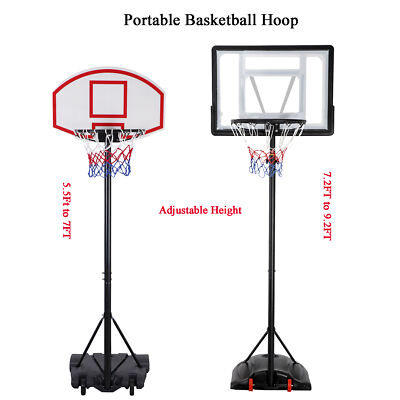
Image Source: i.ebayimg.com
The Genesis of the 10-Foot Rim
James Naismith, the inventor of basketball, initially used peach baskets nailed to the gymnasium balcony railing. These baskets were placed at a height that Naismith deemed appropriate for the game he envisioned – a game of skill and strategy, not brute force. While the exact initial height isn’t definitively recorded with the same precision as today’s standards, historical accounts suggest it was indeed around 10 feet. This height was chosen to create a challenge for scoring while still allowing for accessible shots for players of varying abilities. It was a delicate balance that has largely stood the test of time.
Evolving Standards and the NBA Hoop Height
As basketball evolved from its rudimentary beginnings, so too did its equipment. The peach basket gave way to a metal ring with an open bottom, and eventually, the familiar net was introduced. The NBA hoop height has been a consistent 10 feet since the early days of the league. This uniformity is crucial for maintaining the integrity and spirit of the game across different teams and venues. The NBA’s adoption and adherence to this standard have cemented its place as the de facto height for competitive basketball worldwide.
FIBA Basketball Ring: Global Consistency
The International Basketball Federation (FIBA), the governing body for international basketball, also mandates a FIBA basketball ring height of 10 feet. This global standard ensures that international competitions, from the Olympics to the FIBA World Cup, are played with consistent equipment. This uniformity allows players to showcase their skills on a level playing field, regardless of their country of origin. The shared height fosters a common understanding and appreciation for the game across cultures.
Components of a Basketball Hoop System
A basketball hoop system is more than just a rim. Several components work together to create the playing experience.
The Basketball Rim
The basketball rim itself is a precisely engineered piece of equipment. Its diameter is a critical factor, measuring 18 inches (45.7 cm) on the inside. This specific diameter is designed to accommodate the basketball, allowing for a slight margin of error on shots. The rim is typically made of solid steel for durability and strength, able to withstand the rigors of competitive play, including the occasional slam dunk.
The Standard Basketball Net Height
Attached to the rim is the standard basketball net height, or rather, the net itself. The net, made of cord or chain, hangs from the rim and extends downwards. Its primary purpose is to slow the ball’s descent after it passes through the rim, providing a satisfying swish and clearly indicating a made basket. The net should hang loosely to achieve this effect. While the net’s length can vary slightly, its function is universally the same.
The Basketball Backboard Size
The basketball backboard size also plays a role in the game. Standard backboards are typically 6 feet wide by 3.5 feet tall (1.83m x 1.07m). They are usually made of tempered glass, acrylic, or polycarbonate, offering durability and a good rebound surface. The backboard’s size and material influence how the ball bounces, affecting bank shots and defensive rebounds. The backboard is positioned such that its lower edge is 4 feet in front of the backboard’s face, with the rim centered horizontally on the backboard.
Court Dimensions Basketball
The height of the hoop is intrinsically linked to court dimensions basketball. A regulation NBA court is 94 feet long and 50 feet wide. These dimensions, along with the 10-foot hoop height, create a specific playing environment that dictates spacing, strategy, and the types of plays that are effective. The distance from the hoop to the three-point line, for instance, is calculated based on these court dimensions and the hoop height to create specific shooting challenges.
Adapting for Different Players and Levels
While 10 feet is the standard, there are instances where adjusting basketball hoop height is necessary and beneficial.
Youth Basketball Hoop Height
For younger players, a 10-foot rim can be excessively challenging. This is why youth basketball hoop height is often adjusted downwards. Leagues for younger children typically use lower rim heights to help them develop proper shooting form and build confidence.
- Ages 5-7: Many leagues recommend a rim height of 5 to 6 feet.
- Ages 8-10: A height of 7 to 8 feet is common.
- Ages 11-12: Players in this age group might use a 9-foot rim before transitioning to the full 10 feet.
These adjustments allow children to experience success in shooting, fostering a love for the game and building fundamental skills without the frustration of consistently missing shots. As players grow and develop their strength and coordination, the rim height can be gradually increased.
Adjusting Basketball Hoop for Home Use
For recreational play or home courts, adjusting basketball hoop height is a common practice. Many portable and in-ground basketball systems are designed with adjustable poles. This allows parents to set the hoop at a height suitable for children of various ages and skill levels. It also enables adults to lower the rim for dunk practice or friendly games where a lower setting might be more enjoyable. The ability to adjust the hoop height makes it a versatile piece of equipment for families and communities.
The Impact of Hoop Height on Play
The 10-foot hoop height isn’t arbitrary. It profoundly impacts various aspects of the game:
Shooting Mechanics
The 10-foot rim dictates the arc and trajectory of a shot. Players must develop the strength and technique to get the ball up and over the rim. This requires proper leg drive, elbow extension, and follow-through. A lower rim might encourage a flatter shot, while a higher rim demands a more parabolic arc.
Dunking and Rebounding
For taller players, the 10-foot rim allows for the iconic slam dunk. This explosive act of scoring adds an element of excitement and athleticism to the game. The height also influences rebounding strategies. Players must anticipate where the ball will carom off the rim, developing spatial awareness and jumping ability.
Defensive Strategies
The hoop height affects defensive positioning and strategies. Defenders need to protect the rim from drives and shot attempts. The 10-foot height makes contested layups and dunks more challenging, forcing offensive players to employ more sophisticated moves or rely on outside shooting.
Game Flow and Pace
The 10-foot standard contributes to the fast-paced nature of basketball. The challenge of scoring efficiently from various distances keeps the game dynamic. Players are constantly moving, looking for openings and opportunities to attack the basket or find open shots.
Equipment Variations and Considerations
While the 10-foot standard is prevalent, some variations exist, particularly in less formal settings or for specific training purposes.
Portable Hoops
Portable basketball hoops offer convenience and flexibility. They often feature adjustable heights, allowing users to set the rim at a desired level. This is ideal for backyard play or situations where a permanent installation is not feasible.
In-Ground Systems
In-ground basketball systems are more permanent and robust. Many of these systems also offer adjustable heights, providing a long-term solution for families or training facilities that cater to a wide range of players.
Mini Hoops and Lowered Rims for Training
For very young children or for specific skill development drills, “mini hoops” or heavily lowered rims are used. These are not part of regulation play but serve as valuable tools for teaching the very basics of shooting and ball handling.
Ensuring Proper Hoop Installation and Maintenance
A correctly installed and maintained basketball hoop is crucial for safety and fair play.
Importance of Level Ground
For in-ground systems, ensuring the pole is installed on level ground is paramount. An unlevel installation can lead to the rim being off-center or at an incorrect height, even if the adjustment mechanism is set correctly.
Secure Anchoring
The hoop system must be securely anchored to prevent tipping or instability. This is especially important for portable hoops that are weighed down with water or sand.
Regular Inspections
Regularly inspect the entire system for wear and tear. Check for loose bolts, rust, or damage to the backboard or rim. This helps prevent accidents and ensures the longevity of the equipment.
Frequently Asked Questions (FAQ)
Q1: What is the standard height of a basketball hoop?
A1: The standard height for a basketball hoop is 10 feet (3.05 meters) from the playing surface to the top of the rim.
Q2: Can I adjust the height of my basketball hoop?
A2: Yes, many basketball hoop systems, especially portable and in-ground models, are designed to be adjustable. This allows you to change the height to suit different players and skill levels.
Q3: Who set the standard basketball hoop height?
A3: The standard basketball hoop height of 10 feet is attributed to James Naismith, the inventor of basketball, who established this height in the early days of the sport.
Q4: What is the difference between NBA hoop height and FIBA basketball ring height?
A4: There is no difference; both the NBA and FIBA mandate a hoop height of 10 feet for their respective competitions.
Q5: Why is the basketball rim diameter 18 inches?
A5: The 18-inch internal diameter of the basketball rim is designed to accommodate the basketball with a slight margin, allowing for shots that are close to the edge to still go in.
Q6: What is the standard basketball net height?
A6: The “standard basketball net height” refers to the net that hangs from the rim. The net itself isn’t a height measurement in the same way as the rim, but it’s designed to hang loosely from the rim to indicate a made basket.
Q7: What is the regulation basketball rim made of?
A7: Regulation basketball rims are typically made of solid steel to ensure durability and strength.
Q8: What is the typical basketball backboard size?
A8: A standard basketball backboard size is 6 feet wide by 3.5 feet tall (1.83m x 1.07m).
Q9: How does hoop height affect youth basketball?
A9: For youth basketball, the hoop height is often lowered to help younger players develop proper shooting form, build confidence, and experience success in scoring.
Q10: What are the court dimensions for basketball?
A10: A regulation NBA court measures 94 feet long by 50 feet wide, while a FIBA court is 91.9 feet long by 49.2 feet wide. These dimensions, along with the hoop height, define the playing environment.