
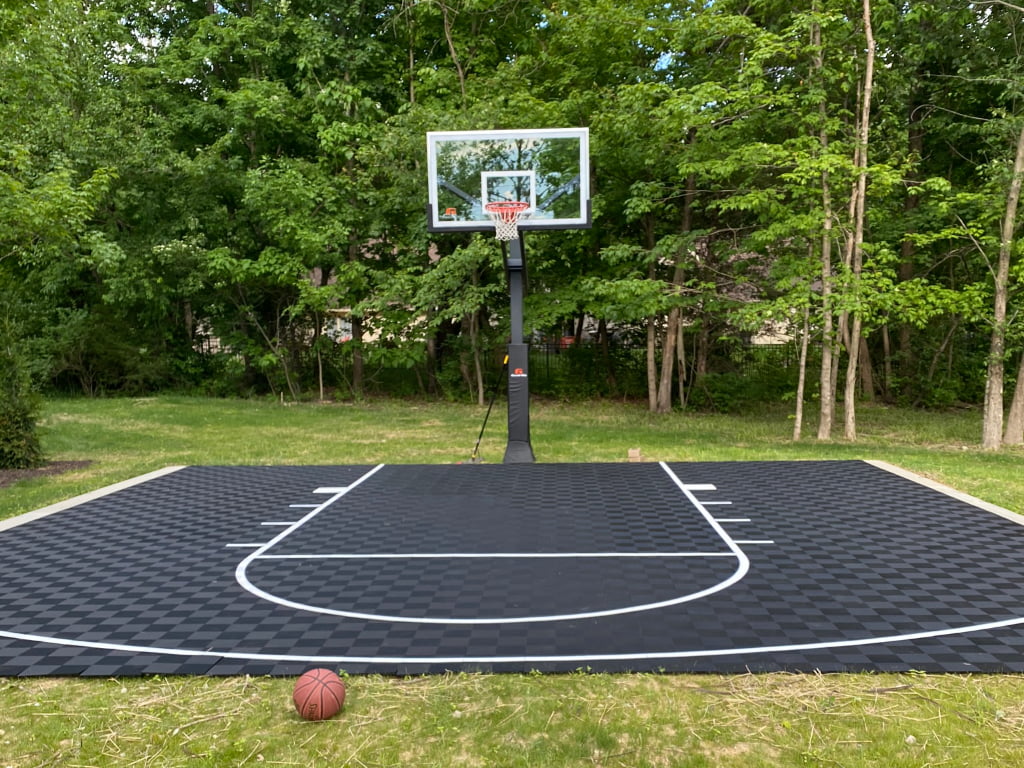
Image Source: modutile.com
Your Guide: How Much Does A Half Court Basketball Cost?
So, you’re wondering about the half court basketball court price? A typical half-court basketball setup can range from $500 to $10,000 or more, depending on materials, size, installation, and additional features. This cost covers everything from the playing surface to the hoop and line markings. Let’s dive deeper into the factors that influence this price for your backyard basketball court cost.
Deciphering the Expense of a Half Court
Building a basketball court, even just a half court, is an exciting project. Whether you envision a full-sized court or a more compact half-court, the cost is a significant consideration. This guide will break down all the components that contribute to the overall expense, helping you set a realistic residential basketball court budget. We’ll look at everything from the base materials to the finishing touches.
The Playing Surface: Your Foundation
The most significant portion of your half court basketball court price will likely be the playing surface. There are several popular options, each with its own cost implications:
Concrete Half Court Pricing
Concrete is a popular choice for its durability and relatively smooth finish.
- Pros:
- Extremely durable and long-lasting.
- Requires minimal maintenance once installed.
- Provides a firm and consistent bounce.
- Cons:
- Can be expensive upfront.
- Can crack over time if not properly installed and maintained.
- Hard surface, which can be tough on joints during play.
Asphalt half court installation cost is often lower than concrete, but concrete tends to last longer and require less sealing.
The concrete half court pricing can vary based on several factors:
- Thickness of the slab: A standard driveway might be 4 inches thick, but a basketball court, especially for frequent use, might benefit from a 5-6 inch slab for added strength. Thicker slabs cost more.
- Reinforcement: Rebar or wire mesh reinforcement adds to the cost but significantly prevents cracking.
- Labor costs: Pouring concrete is labor-intensive and requires specialized skills.
- Site preparation: Excavation, grading, and formwork are essential and add to the overall expense.
Estimated Cost for Concrete Half Court (Surface Only): $15 – $40 per square foot. For a standard half-court measuring 30 feet by 45 feet (1350 sq ft), this could range from $20,250 to $54,000. However, for a smaller recreational half court, say 25 feet by 40 feet (1000 sq ft), the surface cost might be between $15,000 and $40,000.
Asphalt Half Court Installation Cost
Asphalt is another durable option, often preferred for its resilience and quicker installation.
- Pros:
- More forgiving on joints than concrete.
- Can be laid faster than concrete.
- Generally less expensive than concrete.
- Cons:
- Requires regular sealing to prevent deterioration.
- Can be susceptible to damage from freeze-thaw cycles if not maintained.
- May not offer the same aesthetic appeal as concrete for some.
The asphalt half court installation cost is influenced by:
- Base preparation: A stable sub-base is crucial for asphalt longevity.
- Thickness of the asphalt layer: Similar to concrete, thicker layers are more durable but costlier.
- Skilled labor: Proper compaction and finishing are key.
Estimated Cost for Asphalt Half Court (Surface Only): $10 – $30 per square foot. For a 25ft x 40ft half court (1000 sq ft), this could be in the range of $10,000 to $30,000 for the surface alone.
Modular Sports Tiles
These interlocking plastic tiles are a popular modern option, especially for DIY enthusiasts.
- Pros:
- Excellent drainage.
- Good shock absorption.
- Easy to install and replace damaged sections.
- Variety of colors available.
- Cons:
- Can be more expensive per square foot than concrete or asphalt initially.
- May not provide the same consistent bounce as a solid surface.
- Can be noisy underfoot.
When calculating the DIY half court cost, modular tiles are often a more accessible option.
Estimated Cost for Modular Tiles (Surface Only): $4 – $10 per square foot. For a 25ft x 40ft half court (1000 sq ft), the surface cost could be $4,000 to $10,000.
Other Surface Considerations
- Painted Surfaces: Regardless of the underlying material, you’ll need to paint the court lines. This is a relatively minor cost but essential for play.
The Hoop: The Heart of the Court
The basketball hoop is obviously critical. The single basketball hoop court cost can vary wildly.
In-Ground Hoop Systems
These are the most robust and popular for permanent installations.
- Pros:
- Stable and durable.
- Adjustable height is common.
- Various backboard materials (acrylic, tempered glass, polycarbonate) offer different performance and price points.
- Cons:
- Require professional installation due to concrete anchoring.
- Less portable.
Cost Range: $300 – $3,000+ for the hoop itself, depending on brand, backboard size and material, and rim quality. Installation can add another $200 – $800.
Portable Hoop Systems
These are less permanent and can be moved, but are generally less stable.
- Pros:
- Can be moved to different locations.
- Easier to set up.
- Cons:
- Less durable.
- Can be less stable during intense play.
- Water or sand filled bases can be problematic in extreme weather.
Cost Range: $100 – $1,000.
Wall-Mounted Hoop Systems
These are attached to an existing structure like a garage wall.
- Pros:
- Space-saving.
- Can be more affordable than in-ground systems.
- Cons:
- Requires a sturdy wall.
- Limited placement options.
Cost Range: $150 – $700.
Installation Costs: Who’s Doing the Work?
The professional half court construction cost can be a significant chunk of the overall budget.
Professional Installation
This typically involves a company that specializes in sports court construction.
- Services Included:
- Site assessment and planning.
- Excavation and grading.
- Sub-base preparation.
- Surface pouring or laying (concrete, asphalt, tiles).
- Hoop installation.
- Line painting.
- Cost Factors:
- Geographic location: Labor rates vary by region.
- Site accessibility: Difficult terrain can increase costs.
- Complexity of the job: Steep slopes or challenging layouts will cost more.
- Permits: Local building permits can add a small fee.
Estimated Professional Installation Costs: This can add anywhere from $5,000 to $20,000+ to the total project, depending on the scale and materials.
DIY Half Court Cost
For those with the skills and time, a DIY approach can save money.
- What You’ll Need:
- Tools for excavation, leveling, and finishing.
- Materials (concrete, asphalt, tiles, hoop, paint).
- Potentially renting equipment (e.g., concrete mixer, tamper).
- Savings: You save on labor, but you incur the cost of tools and your time.
- Considerations: Ensure you have the necessary skills to achieve a professional-quality finish, especially with concrete or asphalt. Mistakes can be costly to fix.
The DIY half court cost will largely depend on the price of materials and any tools you need to purchase or rent. It’s possible to save 30-50% on labor costs by doing it yourself.
Additional Features and Finishes
Beyond the basic court, there are other elements that can affect your recreational half court expense:
- Lighting: If you want to play after dark, installing lights will add to the cost. This could involve simple floodlights or more integrated pole lights.
- Fencing: To keep the ball in play and define the area, fencing might be desired. This can range from basic chain-link to more decorative options.
- Netting: For very tight spaces, netting can prevent balls from going into neighboring properties.
- Landscaping: Surrounding the court with attractive landscaping can enhance its appeal but adds to the overall budget.
- Drainage: Proper drainage is crucial to prevent water pooling. This might involve grading, French drains, or specific sub-base materials, all of which have associated costs.
- Basketball: Don’t forget the actual basketballs!
Full Basketball Court vs. Half Court Cost
It’s worth noting the difference in price when considering a full basketball court vs. half court cost. A full court is approximately twice the size of a half court.
- Surface Area: A full court (typically 50ft x 94ft for professional, or 40ft x 70ft for recreational) requires roughly double the material for the playing surface compared to a half court.
- Hoops: A full court needs two hoops, doubling that cost.
- Line Markings: Double the lines to paint.
- Installation: While the per-square-foot installation cost might decrease slightly for a larger project, the overall labor and material costs will be significantly higher.
Rough Estimate Comparison:
| Feature | Half Court (approx. 25ft x 40ft) | Full Court (approx. 40ft x 70ft) |
|---|---|---|
| Surface Area | 1,000 sq ft | 2,800 sq ft |
| Surface Cost | $10,000 – $40,000 (Concrete) | $28,000 – $112,000 (Concrete) |
| Hoop(s) | $300 – $3,000 | $600 – $6,000 |
| Installation | $5,000 – $20,000 | $10,000 – $35,000 |
| Total (Est.) | $15,300 – $63,000+ | $38,600 – $153,000+ |
These are very broad estimates and can vary significantly.
Breaking Down the Costs: A Sample Budget
Let’s put together a sample budget for a mid-range, professionally installed concrete half court:
- Court Dimensions: 25 feet x 40 feet (1,000 sq ft)
- Surface: 4-inch thick reinforced concrete
| Item | Estimated Cost Range | Notes |
|---|---|---|
| Site Preparation & Excavation | $1,000 – $3,000 | Includes grading, minor leveling |
| Concrete (4-inch slab) | $15,000 – $25,000 | Material cost for 1,000 sq ft |
| Rebar Reinforcement | $1,000 – $2,000 | For crack prevention |
| Skilled Labor (Pouring/Finish) | $8,000 – $12,000 | For professionals doing the work |
| Hoop System (In-ground) | $500 – $1,500 | Mid-range adjustable hoop |
| Hoop Installation | $300 – $600 | Anchoring the hoop |
| Line Painting | $200 – $400 | Professional court striping |
| Total Estimated Cost | $26,000 – $44,500 | This excludes permits, lighting, fencing, or landscaping. |
Factors Influencing Your Final Price
When you’re getting quotes, be sure to ask about what’s included. Here are the key factors that will shape your half court basketball court price:
- Location: Prices for materials and labor vary significantly by region.
- Site Conditions: If your yard is sloped, has poor drainage, or requires extensive clearing, expect higher costs.
- Surface Material Choice: Concrete, asphalt, and modular tiles have different price points.
- Size of the Half Court: While we’ve used 25×40 as an example, you might want a slightly larger or smaller space.
- Quality of Materials: Higher-grade concrete mixes, thicker asphalt, or premium modular tiles will increase the price.
- Hoop Selection: A basic hoop is much cheaper than a professional-grade, shatterproof glass backboard system.
- Installation Method: Professional installation is more expensive than DIY.
- Additional Features: Lighting, fencing, and specialized drainage systems will add to the cost.
- Permits and Inspections: Depending on your local regulations, you may need permits, which have associated fees.
- Warranty: Reputable contractors often offer warranties on their work, which can be a valuable consideration that might slightly influence the price.
Making the Most of Your Residential Basketball Court Budget
- Get Multiple Quotes: Always get at least three quotes from reputable contractors. Ensure they are detailed and itemized.
- Consider a DIY Approach for Parts: If you’re handy, you might save money by doing the site preparation yourself or painting the lines yourself.
- Phased Construction: If your budget is tight, you could install the surface now and add a better hoop or lighting later.
- Off-Season Installation: Sometimes, contractors offer discounts during slower periods, like late fall or early spring.
- Prioritize Essential Features: Focus on a quality playing surface and a durable hoop first. Extras can be added over time.
Frequently Asked Questions About Half Court Costs
-
Q: Is a half court basketball court worth the investment?
A: For families, fitness enthusiasts, or those who enjoy casual basketball, a half court can provide years of entertainment and exercise. The value depends on how much you’ll use it and your enjoyment of the sport. -
Q: How long does a concrete half court last?
A: A well-built and maintained concrete half court can last 20-30 years or even longer. Regular sealing and crack repair will extend its lifespan. -
Q: Can I build a half court on uneven ground?
A: While possible, building on uneven ground significantly increases the cost due to the extensive grading and foundation work required to create a level playing surface. It’s often more cost-effective to level the area first. -
Q: What are the maintenance requirements for a half court?
A: Maintenance varies by surface. Concrete may need occasional sealing. Asphalt needs regular sealing and crack filling. Modular tiles are generally low maintenance but may require occasional cleaning and checking for loose tiles. All courts benefit from regular sweeping and debris removal. -
Q: What is the typical size of a half court?
A: A standard half court is generally about half the size of a full court. Common dimensions for recreational half courts are around 30 feet x 45 feet, though they can be adjusted to fit available space.
Building a half court basketball court is a significant project, but with careful planning and budgeting, you can create a fantastic recreational space. By understanding the various cost factors, you can make informed decisions to create your dream court without breaking the bank.