
Want to know how to watch basketball like a genius? You can achieve this by developing a deeper appreciation for basketball strategy, focusing on advanced basketball analysis, and consistently engaging in game film breakdown. This guide will equip you with the tools to elevate your viewing experience from casual spectator to insightful observer.
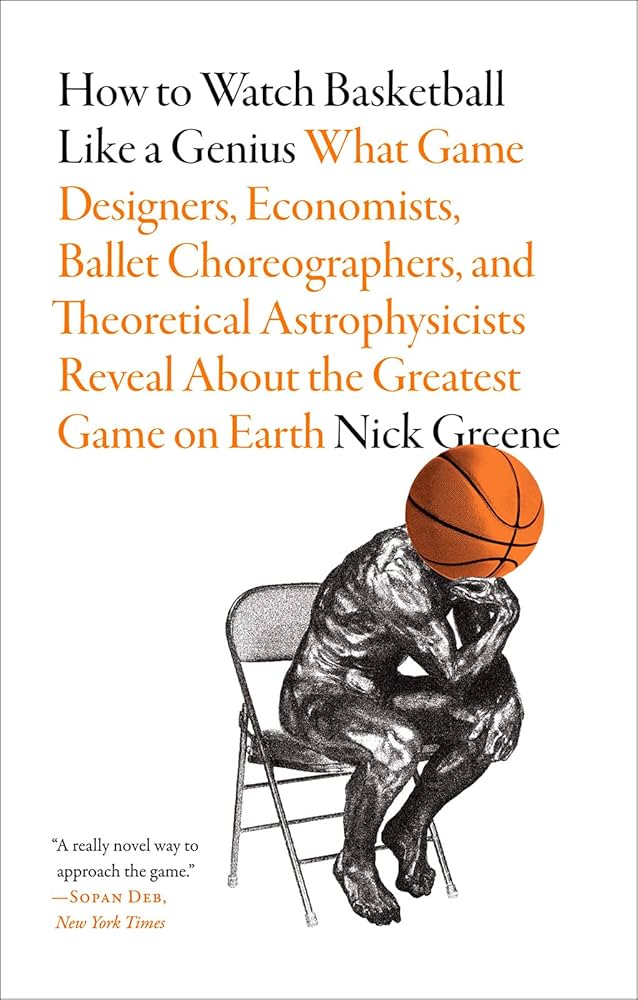
Image Source: m.media-amazon.com
Deciphering the Art of the Game
Watching basketball is more than just following the ball. It’s about recognizing the intricate dance of strategy, the subtle cues, and the mental chess match unfolding on the court. Becoming a basketball genius means seeing beyond the box score and into the heart of the game. It’s about developing a sophisticated tactical understanding that allows you to anticipate plays, dissect decisions, and appreciate the genius behind every move.
The Foundations of Smart Viewing
To truly watch like a genius, you need to build a solid foundation of knowledge. This involves understanding the fundamental principles that govern the game and how they are applied at the highest levels.
Essential Basketball Concepts
- Offense vs. Defense: Every play is a battle between these two forces. Understanding the goals of each side is crucial.
- Spacing: How players position themselves on the court to create passing lanes and driving opportunities.
- Movement: The constant motion of players without the ball, creating mismatches and opening up scoring chances.
- Transition: The crucial moments after a turnover or made basket when teams switch from offense to defense and vice versa.
Key Player Roles
- Point Guard: The primary ball-handler, responsible for initiating offense and directing plays.
- Shooting Guard: Often the team’s best outside shooter.
- Small Forward: A versatile player who can score, rebound, and defend.
- Power Forward: Typically a strong rebounder and scorer near the basket, with increasing shooting range.
- Center: Usually the tallest player, tasked with rebounding, defending the paint, and scoring close to the rim.
Unlocking Advanced Basketball Analysis
Once you grasp the basics, it’s time to dive into advanced basketball analysis. This is where you start seeing the game through a different lens, noticing details that most viewers miss. It’s about understanding why things happen, not just that they happened.
The Power of Game Film Breakdown
Game film breakdown is an indispensable tool for aspiring basketball analysts. By re-watching games, you can pause, rewind, and scrutinize specific plays and player actions. This allows for a more thorough examination of player tendencies and defensive schemes.
What to Look For in Game Film:
- Offensive Sets: Identify recurring offensive plays. How do teams initiate their offense? What actions are used to free up shooters or create mismatches?
- Defensive Schemes: Observe how teams defend. Are they playing man-to-man, zone, or a combination? What are their defensive rotations like?
- Player Movement Off-Ball: Track players without the ball. Are they setting screens, cutting to the basket, or spacing the floor? This movement often creates scoring opportunities.
- Communication: While hard to hear on TV, observing players gesturing and pointing can reveal their defensive assignments and adjustments.
- Body Language: A player’s stance, reaction to calls, or interaction with teammates can offer clues about their confidence and understanding of the game.
Analyzing Player Tendencies
Every player has habits. Recognizing these player tendencies is a hallmark of a genius viewer. Does a particular player always drive left? Do they prefer to shoot off the dribble or catch-and-shoot? Do they always seal their defender on the baseline?
Common Player Tendencies to Observe:
- Shot Selection: Where do they typically take their shots from? Do they favor contested shots or open looks?
- Driving Habits: Which direction do they prefer to drive? Do they finish with their left or right hand?
- Passing Preferences: Do they look to pass early or hold the ball? Do they favor skip passes or dump-offs?
- Defensive Habits: Do they go for steals, play close on shooters, or sag off to protect the paint?
Deconstructing Defensive Schemes
Defensive schemes are the backbone of a team’s identity. Whether it’s an aggressive full-court press, a calculated half-court trap, or a disciplined zone, understanding these strategies is key to appreciating defensive prowess.
Types of Defensive Schemes:
- Man-to-Man Defense: Each defender is assigned to guard a specific offensive player.
- Help Defense: When a defender is beaten, other defenders must “help” by stepping into the lane to prevent an easy basket.
- Switching: Defenders exchange assignments on screens to prevent open shots.
- Zone Defense: Defenders are assigned to guard specific areas of the court.
- 2-3 Zone: Two players at the top of the key, three along the baseline.
- 3-2 Zone: Three players along the free-throw line, two on the baseline.
- Matchup Zone: A hybrid of man-to-man and zone, where defenders guard their area but are also responsible for specific players who enter their zone.
- Press Defenses: Applying defensive pressure all over the court, often to force turnovers or speed up the opponent.
- Full-Court Press: Pressure applied immediately after a made basket or turnover.
- Half-Court Press: Pressure applied once the ball crosses half-court.
Examining Offensive Sets
Just as defenses have schemes, offenses have offensive sets. These are pre-designed plays designed to create scoring opportunities. Spotting these sets and how they are executed demonstrates a deep appreciation for basketball strategy.
Common Offensive Sets:
- Pick-and-Roll (PnR): One offensive player sets a screen for a ball-handler, forcing defenders to make a decision (switch, fight through, go under).
- Pick-and-Pop: Similar to PnR, but the screener moves to the perimeter after screening to receive a pass for a jump shot.
- Inbounds Plays: Specific plays designed to get the ball inbounds safely and create an immediate scoring chance.
- Isolation (ISO): A play where one player attempts to score against their defender, usually with other players spacing the floor.
- Post-Ups: Getting the ball to a player in the low post to take on their defender one-on-one.
Cultivating Court Vision and Basketball IQ
Court vision and basketball IQ development are intertwined. A player with great court vision sees the entire floor and anticipates where teammates and opponents will be. Developing your own court vision as a viewer means actively scanning the entire court, not just the ball.
Enhancing Your Court Vision
As a viewer, your “court vision” is your ability to take in all the relevant information on the screen simultaneously.
Tips for Better Viewer Court Vision:
- Scan the Floor: Don’t just watch the ball handler. Look at the players without the ball. Where are they moving? Are they setting screens? Are they open?
- Focus on Off-Ball Action: The most telling plays often happen away from the ball. A player making a perfect cut or a defender rotating to stop a drive are critical moments.
- Anticipate the Next Move: Based on player positions and the flow of the game, try to predict what will happen next.
- Watch the “Weak Side”: In basketball, the “weak side” is the side of the court farthest from the ball. Observing this area can reveal defensive breakdowns or opportunities for skip passes.
Building Basketball IQ Development
Basketball IQ development is a continuous process of learning and applying knowledge. It’s about making smart decisions, understanding spacing, and playing within the team concept. As a viewer, you develop your IQ by constantly asking “why?”
Strategies for IQ Development:
- Ask “Why?”: After every play, ask why it succeeded or failed. Was it a good shot? Was the defense out of position?
- Empathize with Players: Try to put yourself in the players’ shoes. What decisions would you make in that situation?
- Study Elite Players: Watch how the best players in the world play. How do they create advantages? How do they defend?
- Learn Coaching Tendencies: Different coaches have different philosophies and favorite plays. Recognizing these can add another layer to your analysis.
The Role of Statistical Analysis
Statistical analysis provides objective data to support your observations. While not the whole story, statistics can reveal trends and highlight efficiencies (or inefficiencies) that might not be immediately apparent.
Beyond the Box Score
The traditional box score (points, rebounds, assists) is just the tip of the iceberg. Advanced statistics offer deeper insights.
Key Advanced Basketball Statistics:
- True Shooting Percentage (TS%): Measures shooting efficiency, accounting for 2-point field goals, 3-point field goals, and free throws.
- Formula:
TS% = Points / (2 * (FGA + 0.44 * FTA))
- Formula:
- Effective Field Goal Percentage (eFG%): Adjusts field goal percentage to account for the fact that 3-pointers are worth more than 2-pointers.
- Formula:
eFG% = (FG + 0.5 * 3FG) / FGA
- Formula:
- Player Efficiency Rating (PER): A per-minute measure of a player’s offensive production.
- Usage Rate (USG%): The percentage of team plays a player was involved in while on the floor.
- Assist-to-Turnover Ratio: Measures how effectively a player passes the ball relative to their turnovers.
Using Stats to Inform Viewing
Instead of just looking at who scored the most, use stats to understand how they scored and why the team was successful or unsuccessful.
How Stats Enhance Viewing:
- Identify Efficient Scorers: A player with a high TS% might be more valuable than a higher-scoring player with a lower TS%, as they are more efficient with their scoring opportunities.
- Evaluate Defensive Impact: Metrics like defensive rating or defensive win shares can shed light on a player’s defensive contributions beyond steals and blocks.
- Understand Pace: Statistics like possessions per game can help you understand how fast or slow a team plays.
Putting It All Together: A Genius’s Approach
To truly watch basketball like a genius, you need to integrate all these elements: a strong grasp of strategy, meticulous game film breakdown, keen player observation, court vision, and insightful statistical analysis.
A Step-by-Step Viewing Process
- Pre-Game Preparation: Read up on the matchups, team injuries, and recent performance. Understand the key players and their tendencies.
- First Quarter Focus: Identify the initial defensive schemes and offensive sets. See how teams are trying to establish themselves. Note any early surprises or adjustments.
- Mid-Game Analysis: Observe how teams are responding to each other. Are they adjusting their defenses? Are they exploiting mismatches? Look for patterns in player tendencies.
- Second Half Observations: How are teams managing fatigue? Are they sticking to their game plan or making significant changes? How is the game’s tempo affecting the play?
- Post-Game Review: Reflect on what you saw. Did the stats confirm your observations? What were the critical turning points? How did the tactical understanding play out?
The Genius’s Checklist:
- Spacing: Are players creating and utilizing space effectively on offense?
- Movement: Is there constant, purposeful movement off the ball?
- Communication: Can you infer defensive coordination from player actions?
- Decision Making: Are players making the right choices in crucial moments?
- Adaptability: How well are teams adjusting to new situations and opponent strategies?
- Efficiency: Are players and teams converting opportunities into points effectively?
Frequently Asked Questions (FAQ)
Q1: How can I improve my basketball IQ quickly?
A1: Watch games actively by asking “why.” Analyze player tendencies and defensive schemes. Review game film breakdown and study advanced basketball analysis.
Q2: What are the most important skills for a viewer to develop?
A2: Developing court vision to see the whole floor and a deep tactical understanding of basketball strategy are crucial.
Q3: Can statistical analysis replace watching the game?
A3: No, statistical analysis is a complement to watching. It provides objective data, but visual observation of player tendencies and defensive schemes is essential for true basketball IQ development.
Q4: How do coaches use game film breakdown?
A4: Coaches use game film breakdown to scout opponents, identify player tendencies, develop defensive schemes, and perfect offensive sets.
Q5: What is the difference between basketball strategy and basketball tactics?
A5: Basketball strategy is the overarching plan or philosophy of a team (e.g., emphasizing fast breaks). Basketball tactics are the specific plays and adjustments used to execute that strategy in a particular game or situation.
By adopting this comprehensive approach, you will not only enjoy basketball more but also witness the game with an analytical eye that few possess. You’ll unlock a new dimension of the sport, seeing the genius in every perfectly executed play, every clever defensive adjustment, and every strategic masterstroke. Happy viewing!