
Image Source: blogger.googleusercontent.com
How Many Inches Is a Basketball Hoop? Explained
A standard basketball hoop is 120 inches from the playing surface to the rim. This measurement is a fundamental aspect of the game, impacting everything from professional play to backyard fun.
The Standard Height: A Universal Measurement
When you think of basketball, you likely envision players soaring through the air to sink a shot. The height of the hoop plays a crucial role in this iconic imagery. The standard basketball hoop height is a consistent 10 feet, which translates to 120 inches. This measurement is not arbitrary; it’s a carefully established dimension that dictates the challenge and skill required to play the game effectively. Whether you’re watching the pros or playing with friends, this height remains the benchmark.
From Inches to Feet: Converting the Hoop Height
It’s common to hear the basketball rim height referred to in feet, with 10 feet being the universally recognized figure. However, converting this to inches is straightforward. Since there are 12 inches in every foot, a 10-foot hoop is precisely 10 feet * 12 inches/foot = 120 inches. This conversion is helpful for many reasons, especially when setting up portable hoops or understanding the exact specifications of a court.
Official Basketball Hoop Dimensions: Setting the Standard
The official basketball hoop dimensions are detailed by various governing bodies to ensure consistency and fairness across the sport. These dimensions encompass not only the height but also the rim diameter, backboard size, and the distance from the backboard to the hoop.
Regulation Basketball Hoop Height: The Rulebook’s Word
The regulation basketball hoop height is firmly set at 10 feet (120 inches). This measurement applies to most organized leagues and competitive play. This height is crucial for maintaining the integrity of the game, as it affects shooting arcs, rebounding strategies, and the overall defensive and offensive play.
NBA Hoop Height: The Pinnacle of Professional Play
In the National Basketball Association (NBA), the NBA hoop height adheres strictly to the standard. Therefore, NBA hoops are also 120 inches from the court to the top of the rim. This consistency is vital for the league, allowing players to develop and perfect their skills against a universal standard. The immense talent and athleticism seen in the NBA are often showcased through spectacular dunks and long-range shots, all executed with the hoop at this precise height.
FIBA Hoop Height: An International Perspective
The International Basketball Federation (FIBA), which governs international basketball, also specifies the FIBA hoop height to be 10 feet, or 120 inches. This global standardization ensures that international competitions, including the Olympics and World Cups, are played on courts with identical hoop specifications, allowing for fair and comparable competition among nations.
Youth Basketball Hoop Height: Growing the Game
Recognizing that younger players are still developing their strength and coordination, youth basketball hoop height is often adjusted. This allows children to develop proper shooting form without being overly challenged by the full 10-foot height.
Adjusting for Age and Skill: A Gradual Progression
For very young children, typically aged 5-7, hoops might be set as low as 4 to 6 feet. As they grow and improve, the height is gradually increased. Here’s a general guide for youth hoop heights:
- Ages 5-7: 4 to 6 feet (48 to 72 inches)
- Ages 8-10: 7 to 8 feet (84 to 96 inches)
- Ages 11-12: 9 feet (108 inches)
- Ages 13 and up: 10 feet (120 inches), the regulation height.
It’s important for parents and coaches to choose a hoop height that is challenging but achievable for the child, fostering confidence and enjoyment in the game.
The Basketball Rim Itself: More Than Just Height
While height is the most discussed dimension, the rim itself has specific measurements that contribute to the game.
Rim Diameter and Material: Crafting the Target
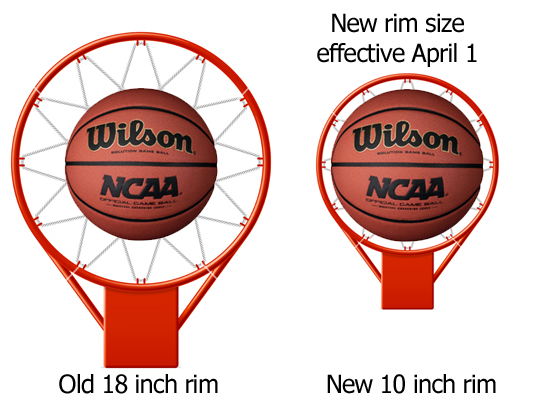
The inner diameter of a standard basketball hoop rim is 18 inches. This diameter is consistent across all levels of play. The rim is typically made of steel, designed to withstand the force of the ball and the occasional player hanging on it. The thickness of the rim is also specified, usually around 5/8 inch for professional and collegiate play, and slightly less for lower levels.
Basketball Net Height: The Finishing Touch
The basketball net height is not a separate measurement but rather a description of the net that hangs from the rim. The net’s purpose is to slow the ball’s descent and provide a clear indication of a successful shot. The net attaches to the rim and hangs downwards. The length of the net is usually about 15 to 18 inches. When properly attached, the net hangs loosely, giving that satisfying swish sound.
Basketball Hoop Measurements: A Comprehensive Look
Beyond the height and rim diameter, other basketball hoop measurements contribute to the overall setup and play.
Backboard Dimensions: The Canvas for Shots
- Professional/College: The standard backboard size is 6 feet wide by 3.5 feet high.
- High School/Recreational: Backboards can be smaller, often around 5 feet wide by 3.5 feet high, or even 4 feet wide by 3 feet high.
- Material: Backboards are typically made of tempered glass for professional play, providing a consistent bounce. Acrylic or polycarbonate is common for outdoor or recreational hoops, while some older or very basic setups might use wood.
The Distance from the Backboard to the Rim: A Crucial Factor
The rim is positioned 6 inches in from the front face of the backboard. This offset is crucial for shooting strategy. Players often aim to bounce the ball off the backboard at a specific angle, and this 6-inch distance is factored into those calculations, especially for shots taken from closer to the basket.
Why is the Hoop Height 120 Inches? The Rationale Behind the Standard
The 10-foot (120-inch) regulation basketball hoop height was established by the sport’s inventor, James Naismith, in 1891. Initially, he used peach baskets, which were nailed to the gymnasium balcony at 10 feet. This height was chosen for a few reasons:
- Challenge: It provided enough of a challenge to require skill and accuracy in shooting, preventing the game from becoming too easy.
- Endurance: It prevented players from simply reaching over the rim to score, requiring more dynamic play.
- Fairness: It created a consistent goal for all players, regardless of their height, although taller players naturally have an advantage.
Over time, as the game evolved and players became more athletic, the 10-foot height proved to be an enduring standard that balances skill, athleticism, and the overall flow of the game.
Portable Basketball Hoops: Flexibility and Setup
Portable basketball hoops offer the convenience of being moved. When setting up a portable hoop, the primary focus is achieving the standard basketball hoop size of 120 inches.
Ensuring Correct Height: Tips for Setup
- Measure Carefully: Use a tape measure to confirm the height of the rim from the ground.
- Level Surface: Ensure the base is on a stable, level surface.
- Stability: Fill the base with water or sand for maximum stability, especially for higher rims or during windy conditions.
- Adjustability: Many portable hoops have adjustable poles. For younger players, you can lower the hoop to the appropriate youth basketball hoop height.
The Impact of Hoop Height on Gameplay
The basketball rim height significantly influences how the game is played at different levels.
Shooting Arcs and Techniques
The 120-inch height dictates the optimal shooting arc. Players need to generate enough backspin and loft to get the ball over defenders and into the hoop. This is why jump shots and floaters are essential skills. For younger players with lower hoops, the shooting arc is naturally flatter, requiring different techniques.
Dunking and Rebounding
Dunking, a spectacular aspect of basketball, is made possible by the 10-foot rim. The height requires significant jumping ability and coordination. Rebounding also becomes a critical skill, as players battle for position to grab missed shots, with the height of the hoop influencing where the ball bounces off the rim and backboard.
Accessibility and Inclusivity
While the NBA hoop height and FIBA hoop height are fixed, the availability of adjustable hoops allows for greater accessibility. This means people of all ages and abilities can enjoy the game, even if they are not playing at a professional or international level. The ability to adjust the hoop height is crucial for introducing the sport to children and for adaptive sports programs.
Common Questions About Basketball Hoop Height
Here are some frequently asked questions regarding the measurement of a basketball hoop.
FAQ Section
Q1: Is the basketball hoop height the same everywhere?
A1: For organized play, yes. The regulation basketball hoop height for professional leagues like the NBA, international play governed by FIBA, and most organized amateur leagues is consistently 10 feet, or 120 inches. However, for recreational play, especially for children, adjustable hoops are common and the height can be modified.
Q2: How do I measure my basketball hoop to check if it’s the right height?
A2: You’ll need a tape measure. Measure the distance from the playing surface (the ground) straight up to the highest point of the rim. This should be 120 inches for a regulation hoop.
Q3: What is the difference between NBA and FIBA hoop height?
A3: There is no difference. Both the NBA and FIBA use the standard basketball hoop height of 10 feet or 120 inches.
Q4: Can I use a hoop that is not 120 inches for official games?
A4: No. For any officially sanctioned game or competition, the hoop must be at the regulation basketball hoop height of 120 inches. Using a different height would disqualify the game.
Q5: How much does the net affect the hoop height?
A5: The net hangs from the rim and doesn’t change the measured height of the rim itself. The basketball net height refers to how far the net extends downwards from the rim, which is typically 15-18 inches. The rim’s height is measured from the ground to the top of the metal hoop.
Q6: Are there any sports that use a different basketball hoop height?
A6: While most traditional basketball follows the 10-foot standard, some variations or related sports might have different heights. For instance, wheelchair basketball hoops are at the same 10-foot height. However, certain streetball variations or informal games might use different heights for added challenge or accessibility. But for the sport as widely recognized and played globally, 120 inches is the unwavering standard.
Q7: I’m buying a basketball hoop for my driveway. What height should I get?
A7: If you want to practice for official games or have older children who want to play seriously, aim for a hoop that can be adjusted to 120 inches. Many driveway hoops are adjustable, allowing you to set the official basketball hoop dimensions and also lower it for younger players.
Q8: What does it mean to convert inches to feet for a basketball hoop?
A8: Converting inches to feet basketball hoop simply means changing the measurement from one unit to another. Since there are 12 inches in a foot, a 120-inch hoop is equivalent to 10 feet. This conversion helps in visualizing the height and relating it to common measurements.
In conclusion, the question of “how many inches is a basketball hoop” has a definitive answer for the vast majority of the sport: 120 inches. This measurement is a cornerstone of basketball, ensuring a consistent and challenging playing experience across all levels, from professional arenas to home driveways. While youth variations exist to foster development, the 10-foot standard remains the ultimate target for players aspiring to master the game.